Water, soda and positioning: three signals in premium non-alcoholic drinks
The premium non-alcoholic segment is showing some interesting signals, even if the picture does not yet amount to a full-scale shift. What these cases do suggest is a more subtle change: brand identity, packaging and corporate structure are becoming increasingly important, not just the launch of a new product. The question, then, is not only what people drink, but how a brand carves out a recognisable space for itself.
Peranel: water as a dedicated business
The clearest example is the restructuring that Nestlé and Platinum Equity are building around the Swiss group’s water and premium beverage assets. The two companies are creating Peranel, a 50:50 joint venture headquartered in Paris that will bring together more than thirty brands, including S.Pellegrino, Perrier, Acqua Panna and Nestlé Pure Life. The enterprise value assigned to the new company is about €4.9 billion, and closing is expected in the first half of 2027, subject to regulatory approvals.
Beyond the financial terms, the move points to a clear logic: water and premium beverages are being separated from the rest of the portfolio so the business can lean more heavily into specialisation. A dedicated entity can move faster, invest more precisely and pursue opportunities that tend to slow down inside a large diversified group. In that sense, mineral water no longer looks like a purely defensive category. It becomes a strategic platform.
The in-house research and development team that will move into Peranel has contributed to roughly 120 launches since 2022 — a pace that suggests innovation is already part of the category’s competitive setup, not a peripheral exercise.
Packaging as a tool for recognition
At a more everyday level, Waterloo Sparkling Water, the US sparkling water brand founded in 2017, has refreshed its visual identity with CBX, updating cans, cartons and pack formats to make the brand easier to spot on shelf. In a crowded category, pack legibility has become part of the competition, not a design afterthought.
The new packaging uses deeper colours and sharper flavour cues, in line with the brand’s positioning: boldly flavoured sparkling waters without added sweeteners. The recipe has not changed; what has changed is how the product presents itself to shoppers. According to the brand, the refresh follows meaningful growth in household penetration in the first half of 2026.
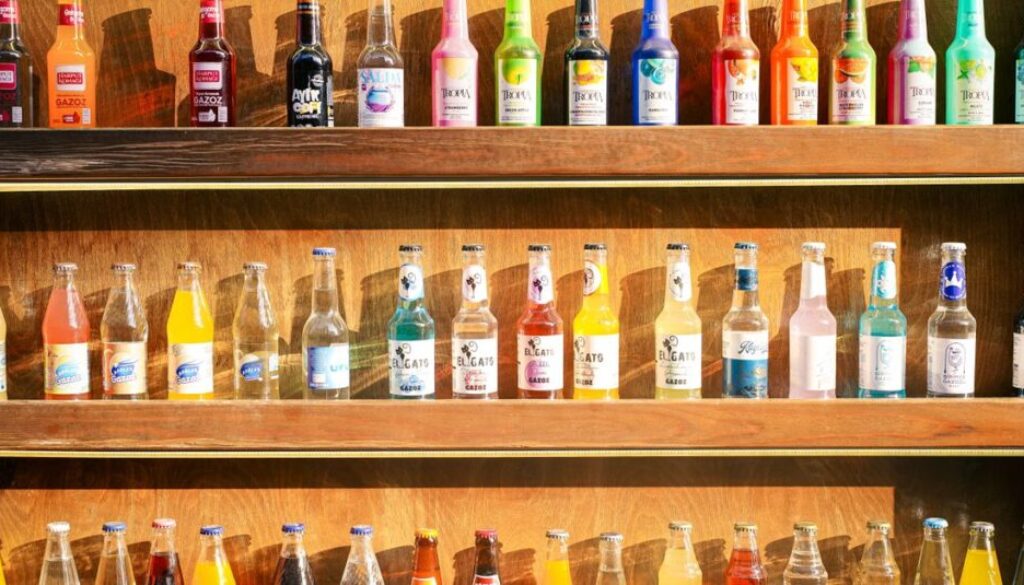
The wider point is more interesting than the redesign itself. In premium non-alcoholic drinks, packaging is increasingly part of the product experience. When sensory differentiation is limited, as is often the case in flavoured sparkling water, visual identity becomes one of the main ways to build recognition and distinction.
A soda trying to stand on its own
A different signal comes from Germany, where Soda Libre, a premium non-alcoholic soft drink produced by Schwarze und Schlichte, a German company whose history dates back to 1664, sponsored a live televised water-sports event broadcast on RTL. It was a visible platform that fit the brand’s lifestyle-oriented positioning.
Soda Libre offers four flavour profiles and is designed for both standalone consumption and mixing. Here again, the point is less the individual sponsorship than the brand-building model behind it: an alcohol-free product developed as an autonomous brand, with its own range and its own media presence, rather than as a simple extension of the spirits world.
Three examples, at very different scales, but with one thing in common: in premium non-alcoholic drinks, value is not created by what is in the glass alone. It also depends on a brand’s ability to stand out, be noticed and occupy a clear place in contemporary consumption. The shift is still unfolding, but it is visible enough to watch closely.