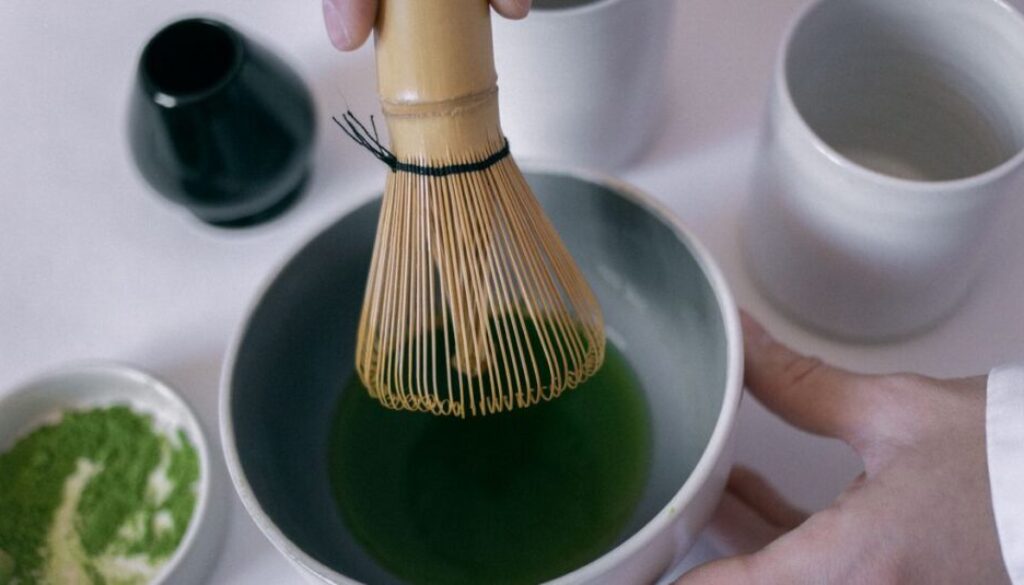
Tea gets less sweet, the chasen gets more portable: two signals from tea culture
Some changes in tea happen quietly, but they still tell you a lot about how the category is being rethought. In ready-to-drink iced tea, some brands are working with lower-sugar formulas and tea-forward flavour profiles. In the world of matcha, the chasen, the traditional bamboo whisk from Japan’s Nara region, is appearing in forms that are easier to use in everyday life. They are different developments, but both suggest a less fixed relationship with tea: one that pays more attention to ingredient, use and context.
In iced tea, sweetness is no longer the only starting point
For a long time, packaged iced tea followed a fairly predictable formula: sweet, easy-drinking beverages in which the tea itself often stayed in the background. Today, in some ready-to-drink segments, the picture looks more varied. Some brands are moving toward lower-sugar formulas and more tea-centric flavour profiles, aiming for a drink that feels closer to something to taste and notice, rather than just a soft drink with tea on the label.
Cold brew has played an interesting part in that shift. Tea extracted in cold water tends to produce a smoother, more premium result, and it works well in formulas that depend less on sweetness to feel balanced. That does not amount to a universal reset; it is better understood as one technique among several that has made it easier to rethink iced tea in a less obvious way.
The flavour palette has also widened. In some products, hibiscus, lavender, cherry blossom, basil or ginger now play a structural role rather than a decorative one. That is where iced tea’s change becomes most visible: it is not only becoming less sweet, but more clearly defined as a tea-based drink with its own identity.
The same can be said of part of the sparkling tea segment, which in some markets is being positioned for more premium consumption occasions. It is a sign of repositioning, not proof of a single global standard. The category remains uneven: classic black RTD tea is still relatively steady in many markets, while the most visible innovation is concentrated in premium, sparkling and botanical territory.
In other words, the shift does not affect all iced tea in the same way. It is mostly happening in niches that are looking for a different balance between convenience, perceived quality and clarity of flavour.
The chasen moves beyond the tea room, but not beyond its history
The second signal comes from matcha, and from an object that stayed remarkably consistent for centuries: the chasen, the bamboo whisk used in Japanese tea preparation. It is still the key tool for frothing matcha, but around it there are now more practical and more decorative reinterpretations.
Suikaen, an artisan workshop in Takayama specialising in chasen, has introduced small flower-shaped charms on some models, a tiny detail that subtly changes the story being told: matcha as something everyday, not only as a practice reserved for those who know the codes of tea ceremony. Alongside these versions, alternative tools have also appeared, including electric models and simpler options for home use.
That evolution says something broader about matcha’s circulation outside Japan. The drink has reached a much wider audience than the one that practices tea ceremony, and the tools associated with its preparation are being re-read through new needs: speed, ease of use, aesthetics, familiarity. The question is not whether that transformation is right or wrong in absolute terms. It is that every time a traditional object enters a new context, the way it is understood changes too.
An episode in 2025, in which the founder of an American matcha startup drew criticism for dismissing the chasen and chawan as unnecessary in a video, made that tension especially visible. Rather than a case to turn into a symbol for the whole sector, it was a reminder of how fragile the line can become between simplification and respect for tradition when matcha is treated only as a trend.
If iced tea shows that a category can shed sweetness without losing identity, the chasen suggests that not every adaptation carries the same meaning. In the first case, the movement appears to bring the ingredient into clearer focus. In the second, much depends on whether the people using the tool are willing to recognise the history it carries, even when they meet it outside its most ritual form.