Tea outside its home ground: matcha cafés and Chinese chains
Outside their countries of origin, tea is taking different paths. On one side is matcha served in cafés, with its set of gestures, tools and cultural expectations. On the other are some large Chinese tea drink chains, which are betting on rapid expansion, local adaptation and formats designed for everyday consumption. The comparison does not describe a single future for tea worldwide, but two very different ways of carrying it across borders.
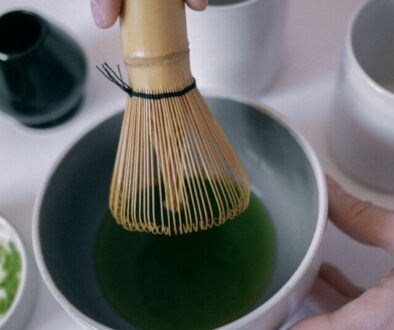
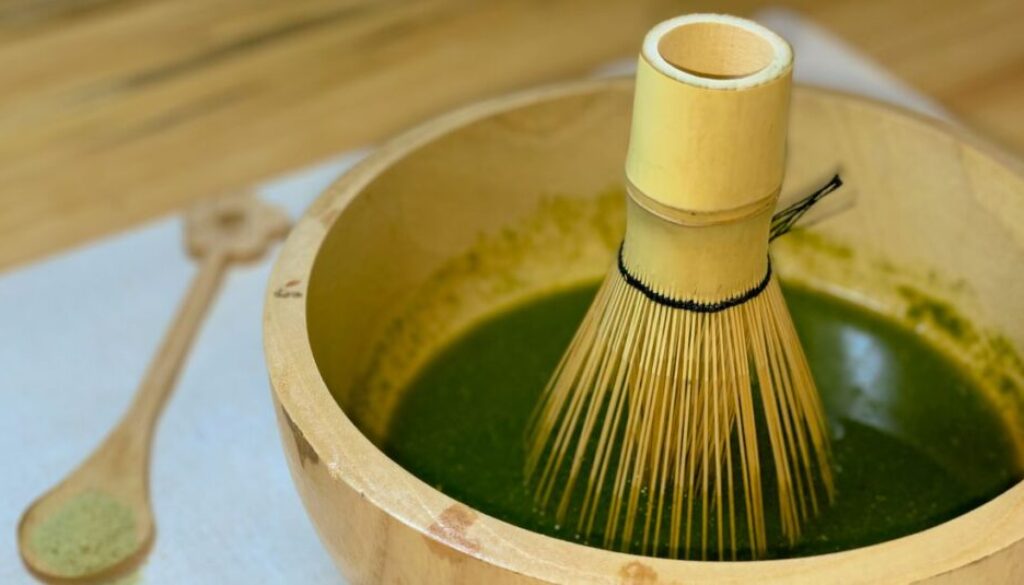
In the case of matcha, the most recognisable symbol is still the chasen, the traditional Japanese bamboo whisk. For anyone familiar with Japanese tea practice, it is more than a utensil: it requires skilled craftsmanship, must be handled carefully and, in some traditions, is even given a small farewell ritual at the end of its useful life. Seeing one on a café counter can be read as a sign of interest in that culture. But the move from ritual object to service tool is never neutral.
In some cafés, the chasen is used in ways that do not suit its delicate nature, leading to faster wear and possible hygiene or maintenance issues. Bamboo does not respond well to harsh treatment, and some professional cleaning methods can damage it easily. Even when the drink in the cup is acceptable, there remains the sense that the tool is being pushed beyond its original setting, losing part of its meaning along the way.
A 2025 promotional video that sparked criticism made that distance even more visible: what stood out was not only the provocation, but the way traditional tools were treated as if they were unnecessary. It says less about tea itself and more about how easily a drinking culture can be simplified when it becomes commercial language.
Chinese chains and the logic of adaptation
On the other side are Chinese brands such as Mixue and Chagee, which opened their first US stores in 2025, while other brands in the sector continued moving into new markets. Here the focus is not the traditional object, but the format: tea-based drinks, often with milk or fruit, presented as fast, accessible and easy to replicate.
These chains are not exporting a ceremony. They are exporting an operating model. Localisation happens through concrete details: sweetness levels, tea bases, seasonal ingredients, partnerships with local players and existing distribution networks. In this framework, international growth depends not only on the appeal of the product, but on the ability to adapt it without losing recognisability.
Chagee, which positions itself around modern oriental tea and premium fresh milk tea, has chosen joint-venture models in some markets to reduce operating risk and rely on established local expertise. In other cases, it has paired expansion with inclusion initiatives that signal attention to the environment it is entering. These are decisions rooted more in logistics and retail strategy than in tea folklore, and that is precisely why they help explain how these names are building a presence outside China.
The contrast with the chasen is sharp. In one case, a cultural object is carried into a new setting and often has to deal with misuse or simplification. In the other, the product is redesigned for that setting from the start. There is no universally better formula: there are, instead, different priorities. On one side, fidelity to a practice; on the other, the ability to work in a different market. That is where the distance between the two stories really lies.