On-trade and spirits: where value is built
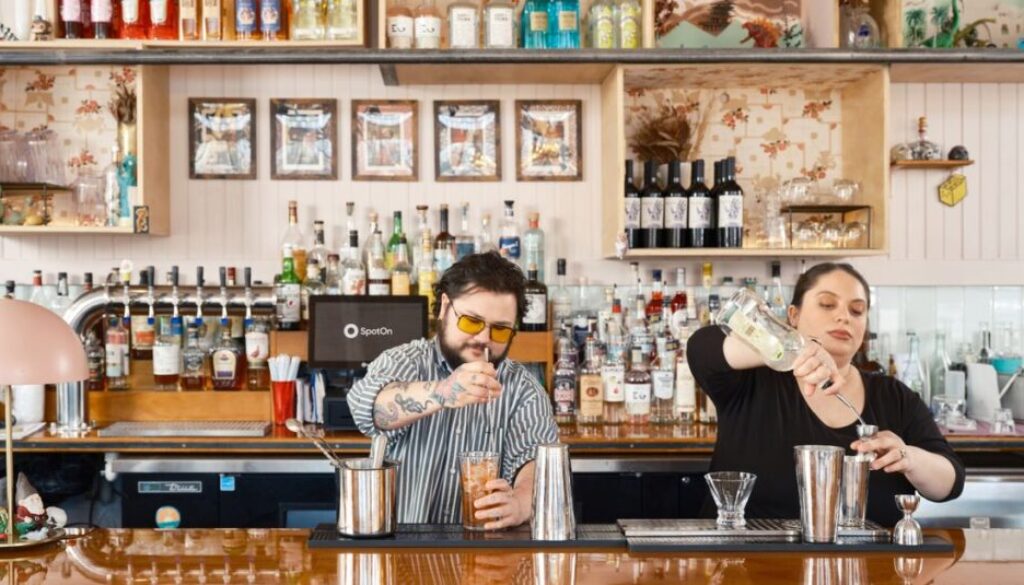
In many European markets, spirits volumes are under pressure, and the on-trade — bars, restaurants, hotels and cocktail venues — remains strategically important for brands. Not because it delivers the biggest volumes, but because it does something other channels struggle to replicate: placing a product in the right setting, in front of the right person, with enough context for its identity and value to land.
For industry players, this is nothing new. What is harder is sustaining a meaningful presence over time. On-trade investment only works when it becomes a mix of relationships, training and credibility. Those results rarely appear in the next quarter’s figures. Still, many operators see this channel as essential because it is often where first impressions are formed, preferences begin to settle, and newer or less familiar consumers are brought into the category.
Bartenders, tourism and urban visibility
Some major European cities, such as Paris, Barcelona, Oslo and Lisbon, can function as showcases and laboratories for new brands. In these settings, locals, international travellers and skilled bartenders intersect, giving a category a recognisable face and a stronger sense of place. A cocktail served in the right venue, in a well-composed setting and with a compelling story behind it, can travel well beyond the room where it was poured.
Tourism has reinforced this dynamic, even if its effects are not always easy to measure neatly. Travellers increasingly look for experiences they can take home, not just destinations to tick off. The spread of aperitivo beyond Italy is a useful example: it has also been helped by direct experience in authentic settings and by its later imitation elsewhere. Similar patterns can be seen with categories such as tequila, gin and some whiskies, which are increasingly first encountered through a cocktail, while travelling or in an influential bar.
The hotel sector has moved in the same direction. Some international groups are rethinking bar spaces not as an in-house convenience, but as standalone destinations that can attract audiences beyond hotel guests. For spirits brands, that creates another point of contact with consumers who are engaged, curious and often willing to spend time understanding what is in the glass.
Authenticity and position
In this environment, what matters is no longer shelf presence or the force of a promotion alone. Increasingly, it is the story a brand can tell with consistency: its link to a place, a technique, a community or a way of making. The idea of terroir, long rooted in wine, has found room in spirits too, where it continues to spark debate but also supports some genuinely credible projects.
Bruichladdich, the Scottish distillery on Islay founded in 1881 and reopened in 2001, is a useful reference point. In 2026, it is celebrating the 25th anniversary of its reopening and is now part of Rémy Cointreau, the international spirits group. Its main ranges include The Classic Laddie, Port Charlotte and Octomore. The distillery presents its production approach as oriented toward transparency, consistency and territorial identity rather than scalability alone. It is not a model every brand should copy, but it shows how a clear and defensible position can create value over time.
The broader point is not that every spirits brand should chase the same formula. It is that in a market where consumers are choosing more deliberately and volume alone no longer guarantees attention, brands that can say something specific and credible about themselves have a real advantage. And the on-trade is often where that message becomes convincing for the first time.
Taken together, these signals suggest that an important part of spirits competition in Europe will increasingly revolve around building meaning. Brands that invest in the on-trade as an ecosystem of relationships, rather than as a temporary promotional channel, may be better placed to face volume pressure and build a more loyal, if more selective, consumer base.