Whisky and provenance: where origin shapes flavour
One word keeps appearing in the language of contemporary whisky: provenance. It does not refer only to the place printed on the label, but to the way a product is assembled piece by piece. The barley comes from a specific field, the casks from a controlled supply chain, the water from a spring or a deep well. Each element carries a story, and in some whiskies that story becomes part of the overall appeal.
This is not a uniform movement. Rather than a broad industry reset, it looks like a practice that a few premium or experimental distilleries are pursuing with greater consistency. It brings production and storytelling closer together, and it is worth watching because it shows how certain brands are building value today.
From field to bottle
One of the clearest examples is Bruichladdich, the Scottish distillery on Islay, with its Octomore line. Octomore 17.3 is a single-farm, single-field, single-vintage whisky made from barley grown at Irene’s Field, a short distance from the distillery. The series is known for its heavily peated profile, but the brand presents it as something more than sheer intensity: balance, detail and complexity are also part of the picture. That approach is reinforced by carefully chosen casks, including bourbon, sherry, sweet wine and virgin oak.
Water matters too. In whisky production it is used at the final stage, to bring the spirit down to bottling strength, and for some distilleries it is considered part of the final character. Seen that way, the case of Thousand Mountains, a craft distillery in Germany’s Sauerland region, fits the same logic. The distillery uses deep groundwater drawn from around 200 metres and has also launched its own water product tied to its production identity. The idea is straightforward: give drinkers the option of reducing a cask strength whisky with the same water associated with the distillery itself, turning a technical step into a more conscious choice.
The cask as a strategic decision
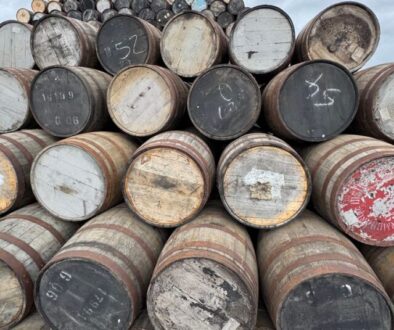
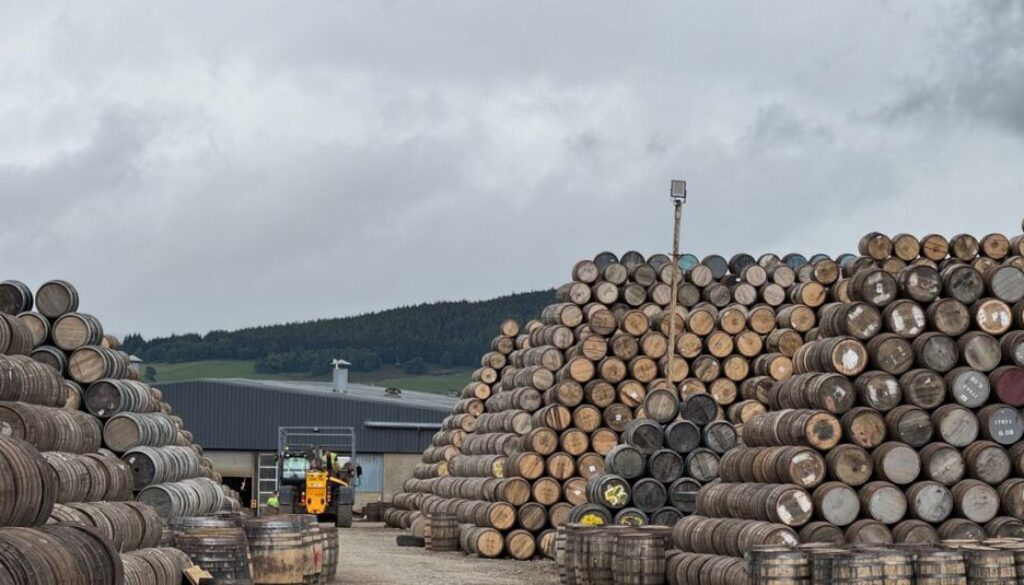
Another form of control over origin involves the wood itself. The Macallan, the Speyside distillery long associated with sherry-cask maturation, has introduced TIME : SPACE Sherry Cask, a whisky influenced by casks seasoned with Valdespino sherry wine. What matters is not only the flavour profile, which remains true to the house’s rich and deep style, but also the more direct relationship built around the cask supply chain: from the wine that seasons the wood to the whisky that later matures in it.
This is not a model every distillery can copy, and it should not be read as a replacement for other approaches. Still, it points to something important: in certain parts of the market, the cask is no longer just a container bought elsewhere, but a design and storytelling tool. Origin, in other words, is not only about saying where an ingredient comes from. It is also a way to explain why one whisky may be valued differently from another by the people choosing it.
In this context, provenance works less like an absolute certification and more like a language. For some premium whiskies it helps make visible choices that usually remain behind the scenes: the field, the well, the wood, the collaboration with the people who prepare the casks. It does not define quality on its own, but it helps explain how the story of the more distinctive end of whisky is being told today.