Beer and pubs in Germany: a market changing shape
There is a point where market figures and drinking habits seem to tell the same story, even if they do not line up perfectly. In Germany, the beer sector is going through a clear period of contraction: in 2025, the number of active breweries fell to 1,415, down from the 2019 peak. Beer volumes have also continued to weaken and, in the latest year reported, recorded one of the sharpest declines in recent history.
Underneath that picture, the pressure is not limited to the biggest names. More than half of German breweries produce at most 100,000 litres a year, or 1,000 hectolitres: small businesses, often tied to a specific place or community, that can stay afloat only while margins and demand hold up. When costs rise and local demand slows, there is very little room left to invest. It is a climate in which many businesses end up defending the present rather than planning for the future.
Those who expand, and those who stand still
Larger companies are responding with a fairly clear strategy: moving beyond traditional beer. Carlsberg, the international brewing group with a significant presence in Germany, has expanded its portfolio in recent years with alcohol-free beers and cider, reflecting changing tastes and drinking occasions. The no-alcohol segment, meanwhile, has grown much faster than the beer market as a whole.
That does not mean social drinking has disappeared. It suggests instead that what is changing is the choice around that moment: what people order, how often they order it, and in which situations. For large groups, the answer lies in a broader, more flexible offer. For many independent breweries, by contrast, repositioning requires levels of investment and adaptation that are not always within reach.
The importance of where beer is drunk
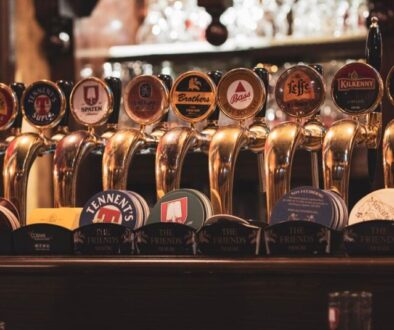
The issue is not only production, but also the spaces where beer is consumed. The British pub, the American taproom and the German neighbourhood Gaststätte each have distinct cultural histories and changing audiences. In these places, beer is not just a product: it is a social gesture, a habit, sometimes even a form of belonging.
For that reason, the debate around the pub has never been entirely straightforward. In some contexts it has been seen as the heart of community life; in others, as a problematic space or simply an outdated one. That ambivalence helps explain why defending these places cannot be reduced to nostalgia, but has to rest on a broader sense of social and cultural value.
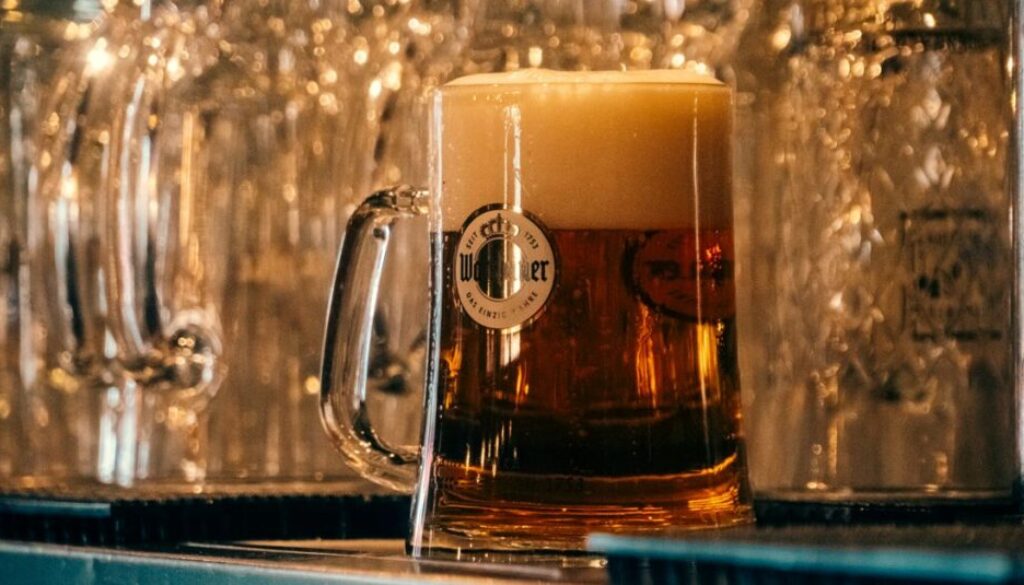
In Germany, where beer culture remains strong but the market is losing momentum, the closure of a small brewery can have an impact that goes beyond the brand itself. Some of these businesses are also places of consumption, local gathering points, points of reference. When they disappear, what is lost is not only a product line, but in some cases a place of social connection.
The sense now is that the sector has to deal with three changes at once: lower volumes, more fragile production models and a different relationship with the places where beer is drunk. There is no single answer, and not every producer has the same ability to adapt. But carrying on as if the market were still what it was a few years ago looks increasingly unrealistic.