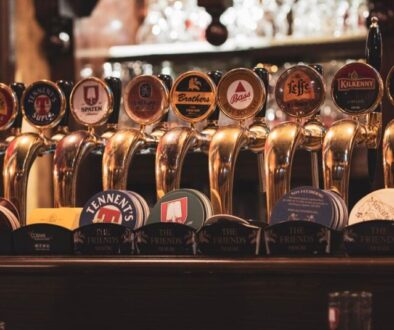
Beer between mature declines, sweet profiles and the return of pilsner
Looking at beer today, the market does not point in just one direction. In some mature markets, volumes remain under pressure. In the UK, meanwhile, sweeter and more fruit-led beers are finding space, especially among younger drinkers. On the production side, pilsner continues to be discussed as a style that puts brewing technique to the test.
These are not signals that can define the whole category on their own. But read together, they help explain how some of the balance between consumption, taste and category identity is shifting.
Germany and a decline that keeps going
Germany remains a European reference point for beer, both because of its history and its scale. Yet in the first half of 2026, beer sales were still down, according to Deutscher Brauer-Bund, the German brewers’ association. The figure confirms a phase of weakness that does not appear to be easing quickly.
The reasons are mixed and not always easy to separate: changing drinking habits, price pressure, and irregular weather that affects out-of-home occasions. In a market this mature, even relatively small shifts become meaningful when they repeat over several months.
Rather than a sudden collapse, the German case points to a gradual loss of momentum. That is what makes it worth watching: not a one-off event, but a trend that continues to weigh on the domestic market.
Fruit lagers and younger drinkers in the UK
The picture looks different in the UK. Fruit lagers, lager beers flavoured with fruit, are gaining visibility, especially among younger consumers. These are not products designed to reinvent brewing tradition in any dramatic way; instead, they speak to an audience looking for something immediate, sweet and easy to read.
For a while, the category has been building through the on-trade, with pubs and bars helping it establish a presence before wider retail distribution. What makes it notable is the generational signal behind it: about half of Gen Z beer drinkers say they are interested in fruity or citrus flavours. That is a preference producers cannot ignore, even if it sits far from the classic idea of beer.
One of the most visible brands in the segment is Jubel, a British fruit-flavoured beer brand whose commercial profile has risen quickly. More than an isolated success story, it helps illustrate a wider shift in language: in some parts of the market, beer seems to work better when it leans into simplicity and drinkability.
Even so, this remains a contained phenomenon. It does not by itself signal a new future for the category, but it does show how part of the market is trying to grow in more accessible flavour territory.
Pilsner as a measure of quality
Alongside these market moves, another debate continues inside brewing: pilsner. For years, many brewers have considered it one of the hardest styles to make well, precisely because its clean profile leaves little room for error. In such a stripped-back style, any imbalance shows immediately.
At the same time, that difficulty should not be turned into doctrine. German brewing education, for instance, often uses pilsner as a teaching ground because it forces students to master the fundamentals: raw materials, fermentation and process discipline. That does not mean it is the only demanding style, or that others are easier by definition.
A good pilsner, then, is less an exercise in nostalgia than a test of precision. The same logic applies to a well-made IPA, which requires aromatic control, hop balance and careful timing. Quality, in the end, does not hide behind style complexity.
The thread connecting these examples is a subtle one: selected markets searching for new consumption formulas on one side, and a return to simplicity as a technical benchmark on the other. Beer is moving through different pressures at once, and they do not always line up neatly.