Beer in transition: three snapshots of a changing sector
There is something revealing about two very different beer stories arriving at almost the same time: on one side, the numbers from the biggest brewing groups; on the other, the renewed attention around a British brand born more than two centuries ago. Read together, they do not point to a single industry-wide reset. Instead, they offer three useful snapshots of how beer is changing: in production, in identity, and in memory.
The global market is shrinking, but not evenly
The BarthHaas Report 2025/2026, one of the brewing industry’s most closely watched references, shows a decline in combined output among the world’s 40 largest brewing groups, by roughly 3%. German producers, who still hold six places in the global ranking, were not spared the slowdown. The clearest exception is Paulaner Gruppe, the Bavarian group tied to Munich tradition and the Oktoberfest, which increased output significantly and moved up one place in the international table.
Further down the ranking, the picture is less upbeat. Several German groups lost ground, in some cases with double-digit declines, and the overall result suggests a sector operating in a market that is smaller than in previous peaks. Commonly cited factors include changing consumption habits, demographic ageing in markets that have historically been strong for beer, and competition from other beverage categories. Those explanations do not tell the whole story, but they help frame the broader direction.
Waldhaus and the rise of alcohol-free beer
A more local example comes from the Black Forest. Privatbrauerei Waldhaus, an independent mid-sized brewery in Baden-Württemberg, ended 2025 with broadly stable volumes despite a sharper regional market decline. The main driver was its alcohol-free range, which grew by double digits year on year and helped support the brewery’s overall performance.
What matters here is not only the figure itself, but the way the category is being framed. Production head Steffen Müller describes alcohol-free beer as a product with its own identity, rather than a fallback option. For a traditional brewery, that signals a shift in mindset: the task is not simply to remove alcohol, but to create a beer that stands on its own in aroma, body, and drinkability.
The lesson of Bass
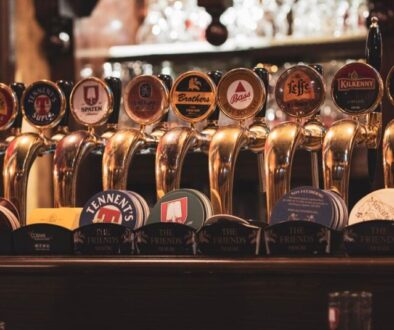
If the present is about adaptation and new segments, the past is a reminder of how quickly a brand’s weight can change. The story of Bass Pale Ale, brewed in Burton upon Trent and becoming in the nineteenth century one of the earliest truly global beer brands, has returned to the spotlight as a case of fame, decline, and rediscovery. Its red triangle remained a recognisable symbol well beyond the United Kingdom, marking a beer that had established itself long before the age of multinational brewing giants.
Its arc is also a useful reminder that success is never permanent. The arrival of continental lagers, lighter and paler in style, gradually reshaped consumer taste and reduced the space for British pale ales in mass markets. Today, Bass is mostly being revisited as a piece of beer heritage rather than as evidence of a broader revival of English brewing tradition. That may be the point that links it back to the present: in beer, perhaps more than in many other beverage categories, the past never fully disappears; it becomes useful when it helps explain change.