Why Wine Bottles Come in Different Shapes
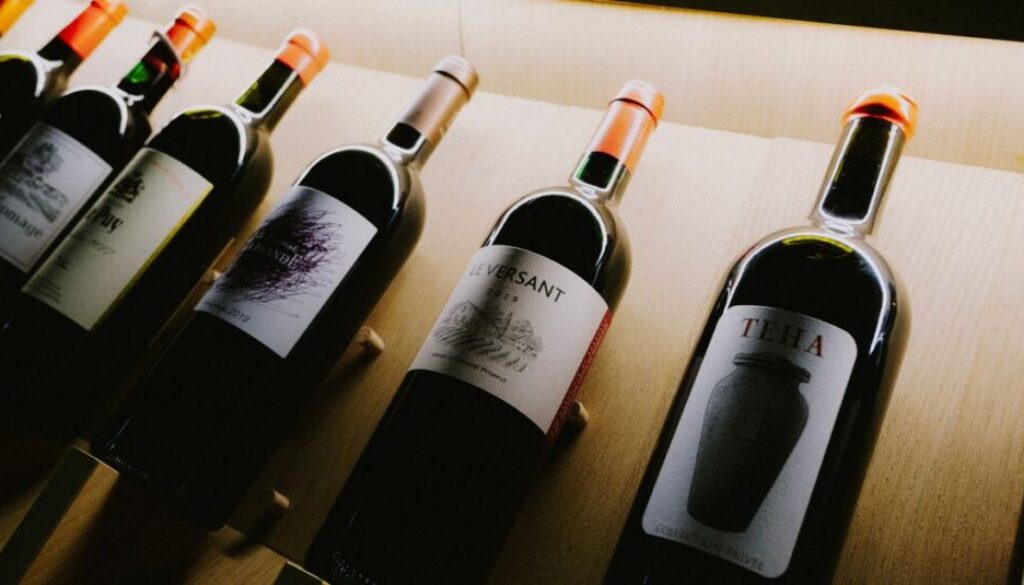
Line them up on a wine shop counter and take a good look: a rounded belly next to a tapered silhouette, high squared shoulders beside softly sloping ones, near-black glass next to pale green. Wine bottles have never shared a single shape, and the reason is rarely purely aesthetic. Every profile carries a story about territory, technique, climate, and the wine itself — and sometimes about the rivalries between producers who simply wanted to stand apart.
The first blown-glass bottles appeared in France around the eighteenth century, round and almost spherical, closer to a flask than a bottle. They were transport vessels more than anything else. Over time, as wine moved from cellars to the tables of the wealthy, the bottle grew taller, more stable, more specialized. And as wine production spread beyond France, each territory felt the need to assert its own identity. The result was a vocabulary of shapes that still guides — often unconsciously — the choices of producers, sommeliers, and consumers today.
From Bordeaux to the Langhe: the major shape families
The Bordeaux bottle is the inevitable starting point. It is the most widely used wine bottle in the world: narrow cylindrical body, tall squared shoulders, originating from the Bordeaux region in France. Those shoulders are not decorative — they are commonly used to catch sediment during pouring, holding it back in the bottle while the wine flows cleanly into the glass. It is an elegant technical solution for structured, tannic wines intended for long aging: Cabernet Sauvignon, Merlot, and many of the great international reds. Glass is traditionally dark green for reds, lighter or clear for whites. A variant with even higher shoulders and a slightly narrower base — the high-shouldered Bordeaux — is often used for particularly fine whites and reds, and for sweet passito wines, where the taller profile helps preserve the character of already highly concentrated wines. There is also a half-bottle format at 375 ml — the demi-bouteille — practical for tastings, by-the-glass service, and wines meant for immediate consumption.
The Burgundy bottle tells an entirely different story: soft, sloping shoulders that taper gently toward the neck, a wider and more rounded body, a silhouette that almost suggests a stylized amphora. It is the bottle of Pinot Noir and Chardonnay, and its shape is not only tradition. Today the Burgundy shape is used for Pinot and Chardonnay far beyond Burgundy itself, wherever these varieties are grown.
The Champagne bottle descends visually from the Burgundy shape but is a structurally different object: thicker glass, greater weight, a deeper concave base — what is known as the punt. All of this is designed to withstand the internal pressure that sparkling wine exerts during its time aging on the lees. Traditional-method sparkling bottles are typically engineered to hold around 5–6 atmospheres of internal pressure — roughly 2.5 to 3.5 times that of a standard passenger car tyre at around 30–35 psi — which is why the glass must be substantially thicker than in still wine bottles. The shape is not a symbol of luxury; it is applied engineering. It is also worth clarifying that remuage — the progressive tilting and rotation of bottles to coax sediment toward the neck before disgorgement — belongs specifically to the Champagne bottle and the traditional method; the Burgundy bottle used for still wines serves a different purpose and does not share this function.
From the Rhine valley and Alsace comes one of the most recognisable silhouettes: tall, tapered, almost tubular, with no defined shoulder. The Rhenish or Alsatian bottle is traditionally associated with aromatic white wines — Riesling, Gewürztraminer, Pinot Gris in certain contexts — and its elongated profile is widely read as a visual signal of freshness and aromatic style. A common explanation points to reduced surface exposure, but in a sealed bottle it is mainly closure type, storage conditions, and light exposure that determine real oxygen contact; the shape is therefore primarily a well-established territorial convention and a clear communication tool. Glass is typically light green or brown, offering protection from light.
The pulcianella is something else entirely: wide and rounded in the body, with a long, narrow neck, a shape that almost seems to provoke compared to the clean lines of French bottles. It has historical roots in several areas of central and southern Italy — including Campania, where it is often associated with Falanghina — and that unusual form is not pure folklore. Some producers and commentators suggest that the narrow neck influences the pace of pouring and the perception of freshness, though oxygen exposure in practice depends on many factors, including pour technique and closure type.
- Bordeaux — Cylindrical body, tall squared shoulders. For structured, tannic reds and dry whites. Dark glass for reds.
- High-shouldered Bordeaux — A taller, more tapered variant. Used for fine whites, reds, and passito wines.
- Small Bordeaux (demi-bouteille) — A 375 ml reduced format. Used for tastings, by-the-glass service, and immediate-consumption wines.
- Burgundy — Sloping shoulders, wider body. For Pinot Noir and Chardonnay, in Burgundy and beyond.
- Champagne — Similar to Burgundy but heavier, thicker glass, deep concave base. For Champagne and traditional-method sparkling wines.
- Rhenish or Alsatian — Tall, tapered, no defined shoulder. For aromatic whites such as Riesling and Gewürztraminer.
- Albeisa — Similar to Burgundy, formally revived in the Langhe in 1973. For Barolo, Barbaresco, and great Piedmontese wines. Antique green or brown glass.
- Pulcianella — Round body, long narrow neck. Associated with Campanian and central-Italian wines, including Falanghina.
- Porto — Straight body, high rounded shoulders, wider neck. For Port and similar fortified wines. Green or brown glass.
- Marsala — Straight body, high rounded shoulders. For Marsala wine. Dark glass, brown or near-black, for light protection.
- Antinori — A custom-profile bottle developed by the Tuscan Antinori family, used as a recognition tool for select flagship wines.
- Clavelin or Jura — Squat 62 cl bottle, used exclusively for Vin Jaune from the French Jura region.
Local identity in glass: Albeisa, Porto, Marsala, Clavelin
Some bottles are so closely tied to a territory that they have become something close to a mark of origin. The albeisa comes from the Langhe hills of Piedmont and, although its history reaches back to the eighteenth century, it was formally revived in 1973 by a group of sixteen producers led by Renato Ratti, who wanted to give the great wines of the area — Barolo and Barbaresco above all — a recognisable container of their own. The shape echoes the Burgundy bottle, but the glass is typically antique green or brown, and every bottle carries the word Albeisa embossed on the glass as a sign of belonging. It is not just a vessel: it is a declaration of territorial identity.
The Port bottle has a straight body, high rounded shoulders, and a slightly wider neck than other similar bottles — a practical detail that makes pouring easier for a wine that is often dense and highly concentrated. Glass is green or dark brown, a necessary protection for a fortified wine that has already undergone a process of controlled oxidation and must hold up well even after opening. The Marsala bottle follows a similar logic: straight body, high shoulders, dark glass — brown or almost black. Marsala as a commercial wine has its origins between the late eighteenth and early nineteenth century, and its bottle, which has remained essentially unchanged, faithfully reflects that production identity.
Perhaps the most extreme case of a bottle tied to a single wine is the clavelin, also known as the Jura bottle: squat, almost square in profile, holding 62 centilitres rather than the standard 75. It is used exclusively for Vin Jaune from the French Jura region, an oxidative wine aged for at least six years under a film of yeast in partially filled barrels. The smaller capacity is not arbitrary: it corresponds approximately to what remains of a litre of wine after evaporation during that long aging process. In this case, the bottle is literally a measure of time.
The antinori bottle follows a very different logic: a custom shape developed by the historic Tuscan family for some of their flagship wines, designed to be immediately recognisable on the shelf. It represents a modern and deliberate use of the bottle as a communication tool — something that builds on tradition without rejecting it, adding a specific narrative function to the silhouette of the glass itself.
One more detail deserves attention, and it tends to go unnoticed: the colour of the glass. The deep green of Bordeaux reds and the amber of fortified wines are neither accidental nor purely aesthetic choices. Coloured glass filters the wavelengths of light that can degrade a wine’s aromatic compounds — a fault known as lightstrike, or in French goût de lumière. Aromatic whites, which are particularly sensitive to ultraviolet light, are often bottled in pale green or brown glass for this reason. Structured, tannic reds are generally more resilient, and in certain markets near-opaque dark glass has also taken on an aesthetic and positioning role of its own.
Looking closely at a bottle before opening it, then, is not a habit reserved for seasoned sommeliers. It is simply a way of reading the first chapter of what you are about to drink: where it comes from, how it was conceived, and why someone chose that particular shape — and that particular colour of glass — to hold it.