Rum and the search for credibility
There comes a point in the life of every spirits category when reputation alone is no longer enough. Rum seems to have reached that point some years ago, although it is better read as a set of separate signals than as a single turning point: the work of some major brands in the United States, the growth of European events aimed at collectors, and the interest of an increasingly attentive international niche for rare, aged bottles. They do not point in exactly the same direction, but they do suggest a category looking for a new balance.
In the United States, rum has a meaningful commercial presence, but it is still often associated with summer or beach cocktails. That is why consumer education has become so prominent: not only to encourage more ambitious bottles, but to change the frame through which the spirit is understood. The Daiquiri, with its three essential ingredients, has returned often to the conversation because it highlights what a rum can do without needing much elaboration. More structured drinks, such as a Rum Old Fashioned, also help move the category beyond the idea of easy, immediate consumption.
This effort depends heavily on the on-trade. Bartenders are not just recipe-makers, but interpreters who help present a spirit to someone meeting it for the first time. In a category trying to move away from familiar clichés, that role matters: bartenders often turn a passing curiosity into a more lasting and informed drinking habit.
Europe, rarity and small releases
While the American market is focused on broadening the base, Europe seems more interested in rarity. The German Rum Festival reached its fifteenth edition in 2026 and has become an important event for European rum collectors and enthusiasts. It is not a fair built around large volumes, but a showcase where limited releases, single casks, high-end agricoles and bottles with very specific profiles can stand out.
In this setting, what matters most is not the brand alone, but the individual release. Among the offerings are cask-strength bottlings, limited Martinique agricoles and rums from origins beyond the Caribbean, including Vietnam and Mauritius. They are different examples, but they all point to the same logic: offering a precise, dated, recognisable profile designed for an audience looking for difference rather than continuity.
The approach is not far from the single malt whisky world, even if rum remains far more fragmented. Rather than proving that a shift has already been completed, these events suggest there is growing room for bottles that stand out through specificity, origin and maturation.
Collecting as a signal, not a destiny
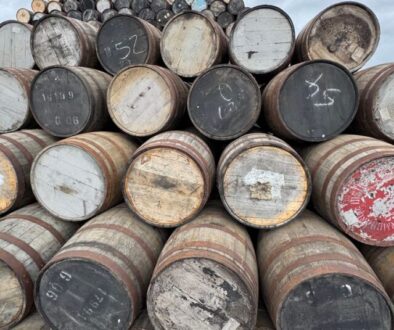
That is also where independent bottlers fit in. Often with roots in whisky, they select single casks of Caribbean rum and release them through specialist international networks. The numbers remain modest, but volume is not the point: the point is access to complex profiles that can be easier to find through these channels than in the broader market.
Ripe tropical fruit, citrus, toasted oak and more resinous or varnished notes make up a flavour range that now seems to meet a more articulate demand than it did a few years ago. That still does not mean rum has become the new whisky, either commercially or culturally. It does suggest, however, that the category is building a higher level of desirability, where age, origin and the single cask can matter as much as, and sometimes more than, the brand.
Read together, these signals do not describe a uniform revolution. They do show a rum category trying to work on two separate levels: broadening its consumer base and improving the way it is told, while also developing a rare, collectible segment capable of attracting attention and value. If those two forces can coexist without cancelling each other out, that may be where rum’s real maturity is ultimately measured.