Daytime aperitif culture and the vermouth segment’s new momentum
For a long time, out-of-home drinking followed the rhythm of the evening: aperitif as a prelude to the night, not as a destination in its own right. That pattern is changing more deeply than a temporary post-pandemic adjustment. In markets such as Spain, where the decline of nighttime leisure is especially visible, the shift appears structural, and it is quietly redrawing the boundaries of an entire category.
Vermouth, along with the broader family of alcoholic aperitifs, is perhaps the product that best captures this moment. Not because it has reinvented itself, but because the surrounding culture has moved closer to what it already was: a daytime drink, a slow-conversation drink, a drink for a table in the open air. The global vermouth market is growing strongly, and its positive performance points not only to solid commercial resilience, but also to a successful cultural repositioning.
Mindful drinking: fewer excesses, more occasions
The conversation around mindful drinking is often framed as a risk for the alcohol industry. If people drink less, the argument goes, they buy less. But the aperitif segment suggests a more nuanced reality. More conscious drinkers do not necessarily stop drinking; they change when and how they drink. Vermouth, with its moderate alcohol content and inherently social character, sits squarely in that space.
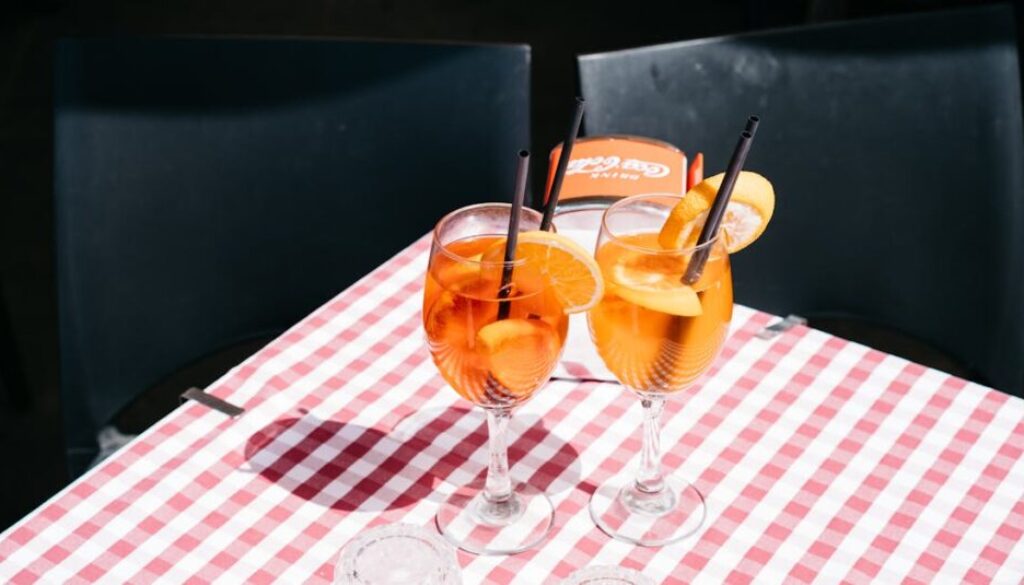
Millennials and Gen Z, in particular, are showing a growing preference for lighter drinks consumed during the day or in early evening settings, with more emphasis on the quality of the experience than on the quantity poured. The success of the spritz, in all its variations, has helped normalise that idea: drink better, not simply more. Vermouth has benefited from this cultural repositioning perhaps more than any other product in the category.
At the same time, demand for reduced-alcohol and alcohol-free versions has moved beyond niche status. Some of the most effective recent activations in the aperitif space have folded zero-sugar and zero-alcohol variants into the brand architecture as natural extensions rather than separate side projects. The aperitif ritual becomes more inclusive, open to people regardless of whether they choose to drink alcohol. That broader reach helps explain why the segment has held up relatively well even as overall consumption has softened in some markets.
Hybridisation and new formats
The momentum around aperitifs is not limited to vermouth itself. The appeal of this drinking occasion has encouraged companies far outside the traditional spirits world to carve out a place in that time slot. Krombacher, a German brewing group best known in its domestic market, has introduced a line of beer-based drinks positioned as bier-aperitifs: three variants with bitter orange, cola and lime, and wild berry notes, each kept at a relatively modest alcohol content of 4% to 5%. The 500ml can format is geared toward informal settings, from a park visit to a barbecue or an impromptu gathering.
This is not an isolated move. The convergence of beer, aperitif and ready-to-drink cocktail categories is one of the most revealing shifts in contemporary beverage culture. The lines between product families are blurring not through loss of identity, but in response to consumers who think in terms of moments and moods rather than strict category labels.
Quality, storytelling and the education challenge
One question remains especially important for smaller, more artisanal producers and for markets with a well-established vermouth tradition: how does a favourable trend turn into structural growth? The most convincing answer lies in consumer education. Not in a patronising sense, but in a practical one: helping drinkers understand what sets a quality vermouth apart from an industrial product, why a complex botanical recipe differs from a simple flavoured base, and how the drink should be served and paired.
The popularity of the spritz and of the aperitif occasion has lowered the entry barrier to the category, which is an advantage. But it can also flatten perception if it is not matched by stronger storytelling. The consumer choosing a daytime aperitif today is often more curious and selective than assumed, and willing to spend more if the value is clear. For vermouth, that is where the real growth opportunity lies — not just in volume, but in value and loyalty.