Abandoned vineyards, young producers and drought: European wine faces a difficult transition
There comes a point when a crisis stops looking cyclical and starts looking structural. European wine seems to have reached that stage. This is no longer only about slower markets, softer exports or shifting consumer habits; the deeper issue is that pressure is now spreading across the foundations of the sector, from water management in the vineyard to plot abandonment, from stalled generational renewal to the fragility of direct-to-consumer sales models. Looking at these trends together, rather than separately, makes it easier to see where the industry is headed.
Land that is slowly emptying out
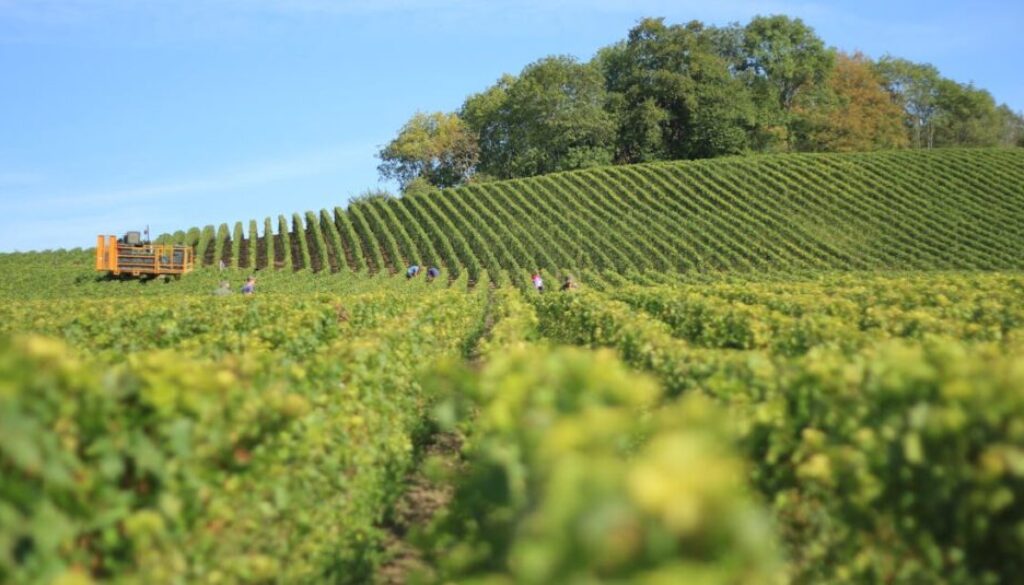
The quietest problem, and perhaps the most serious, is vineyard abandonment. Across many wine-growing areas in Italy, including some with a strong quality reputation, the phenomenon has become too large to dismiss as a marginal issue. Falling profitability pushes growers to walk away; the lack of an organised succession plan then turns that decision into damage that is very hard to reverse. Replanting takes time — at least four years before the first harvest — but rebuilding a viticultural economy in a territory where it has disappeared can take decades, if it happens at all.
Umbria offers a telling example: in three years it lost about 20% of its viticultural potential, with the decline concentrated in high-quality vineyards. In this context, cooperatives often remain the only practical buffer. Italian wine cooperatives account for more than 55% of national production and generate a combined turnover of more than five billion euros. It is therefore no surprise that several cooperative wineries have begun managing vineyards left behind by older members, with the aim of preserving agronomic continuity and keeping land within the supply chain. It is an economic choice, but also a territorial one: defending the vineyard means defending the social fabric around it.
A younger generation of producers is also responding. The Manifesto of Young Producers and Small Wineries, launched during the Wine Summit in Città di Castello, in Italy’s Umbria region, as part of Only Wine — an Italian fair focused on small-scale production and now in its 13th edition — sets out twelve principles covering quality, territorial identity, biodiversity and sustainability, as well as access to credit, simpler bureaucracy and training. More than 160 wineries took part. The outcome is not a symbolic declaration, but the basis for a permanent observatory intended to turn the needs of smaller businesses into practical policy guidance. It is a meaningful signal: the generation expected to inherit Italy’s wine legacy is not merely asking for space, but building the tools to claim it.
Water as a strategic variable
At the same time, the way vineyards are managed is changing too. Water has become the most critical and least predictable variable in modern viticulture. An analysis from the Porto Protocol Foundation, an international wine-sustainability network founded by Taylor’s Port, makes clear that no region can ignore the issue, even though each area has to deal with it differently.
In Mediterranean regions such as Sicily and south-central Spain, the main challenge is summer water scarcity following concentrated winter rainfall. In Atlantic areas such as Bordeaux, excess humidity and waterlogging are more pressing risks. In continental zones — from Burgundy and Piedmont to Oregon — unpredictable rainfall and late frosts demand yet another set of responses. One of the most useful findings concerns the soil itself: each additional percentage point of organic matter can retain between 16,000 and 25,000 extra litres of water per hectare. With the right techniques, irrigation needs can also be reduced by 20% to 60%. And producing one litre of wine may require up to half the water currently used if more efficient practices are adopted. These are figures that shift the conversation away from sustainability rhetoric and toward concrete agronomic management.
When the sales model no longer holds
The fragility is not limited to the vineyard. Commercial models are also under strain. In the North American market, the wine club — a key direct-to-consumer tool for many wineries — is facing a retention crisis: nearly 40% of new members cancel within their first year. In an environment where acquiring a new member can cost hundreds of dollars in marketing, staffing and incentives, losing that investment before it has been recouped is a profitability problem, not just a branding one.
Models built around automatic periodic shipments worked when consumer loyalty was steadier and competition less intense. Today, they need a much deeper rethink. The direction is clear enough: less automation, more personalisation, and a relationship with customers that feels real. Sending bottles on schedule is no longer enough; the challenge is to give people a reason to stay.
Meanwhile, in Veneto in north-eastern Italy, the region has approved an official register of heroic and historic vineyards, closing a regulatory gap left open by Italy’s wine law a decade ago. The criteria include slopes above 30%, altitudes over 500 metres, terraced or stepped vineyards, and documented presence before 1960. Listing opens access to protection, restoration and promotion tools: a concrete step toward safeguarding a heritage that, without institutional support, could disappear through sheer economic attrition. Bordeaux, for its part, shows that a region can still find room to grow when it reinvents itself without losing its identity, as recent attention to its white wines suggests.
Taken together, these developments portray a sector that is not simply under pressure, but undergoing a deep transformation. The strain is real, but so are the responses. The question is whether the industry can coordinate them before losses of vineyards, growers and water become permanent.