Bars, mezcal and place: why drinking spaces still matter
There is a way to read two phenomena that, at first glance, seem far apart: the growing visibility of mezcal on cocktail bar menus and the difficulty many venues have in staying open and active. It is not quite a contradiction, but a tension. On one side is a drinking culture that has become more curious and more precise; on the other is a hospitality sector under pressure, where quality alone no longer seems enough to offset rising costs and less reliable footfall.
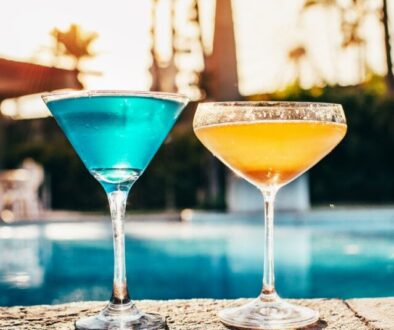
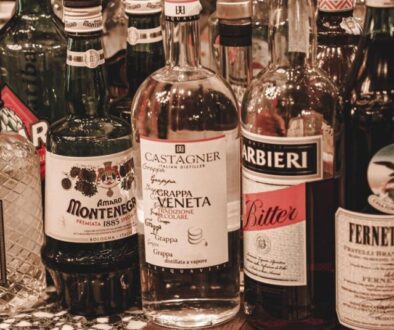
Mezcal is now very present on many contemporary cocktail menus. This is not new ground: the Oaxaca Old-Fashioned, which replaces bourbon with smoky agave spirit, has been regarded as a modern classic for more than a decade. What matters now is how bartenders are using it. In many bars, mezcal is no longer treated simply as a tequila substitute, but as an ingredient with its own logic, one that can work with amari, bitters, floral notes or savory accents. A cocktail like Fumata Bianca, which brings together sweet, herbal and smoky elements in a measured structure, captures that approach well: agave is there not to surprise, but to build balance.
The ingredient as a language
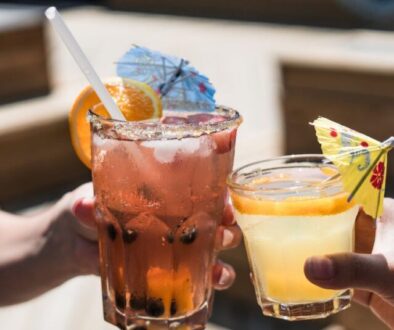
The spread of mezcal across cocktail lists also says something about how spirits are being understood today. Increasingly, they are not seen as fixed categories with preassigned roles, but as materials to combine, adjust and rewrite. That approach has brought mezcal into reworkings of classics as different as the Manhattan and the Negroni, the dirty Martini and the Piña Colada, as well as more personal drinks such as the Ocho, which uses hibiscus- and raspberry-infused mezcal to reinterpret a regional Texas drink.
That kind of work, however, depends on a very specific context: venues with a clear offer, trained staff and a clientele willing to pay attention to what is in the glass. And that is where the picture becomes more fragile.
When a venue closes, a social outpost disappears too
A study commissioned by Cocktail.Kultur.Gesellschaft, a German industry association, and carried out by EY-Parthenon, offers an interesting view of the role of drinking venues. In Germany, primarily beverage-focused establishments fell from about 40,800 in 2015 to just over 32,600 in 2024, a decline of roughly 20 percent in less than a decade.
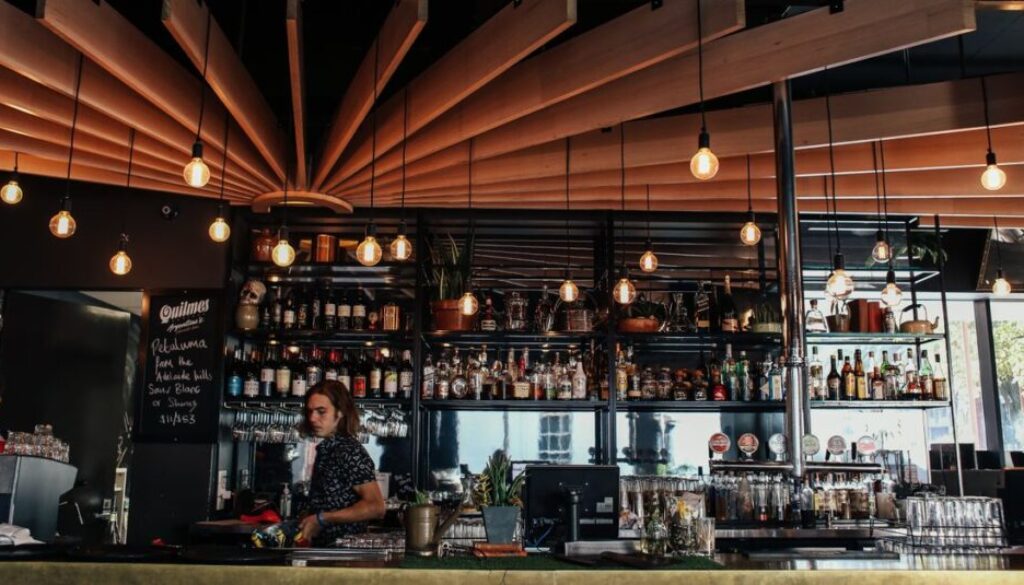
The study describes these spaces as third places—settings distinct from home and work where informal relationships and community ties can develop. It is a useful definition not because it romanticises bars and pubs, but because it points to a concrete function: in many urban and peripheral settings, these venues are not just points of sale, but places where habits, conversations and everyday rituals are held together.
According to the study, pressure is coming from multiple directions at once: labour costs, energy, rents and footfall that in many cases has not yet returned to pre-pandemic levels. In that context, even a modest rise in operating costs can tip a business from difficult to unsustainable.
The point is not to defend the sector out of nostalgia. It is to recognise that cocktail culture lives in venues before it lives in bottles. Outside bars, experimentation often narrows and the direct exchange between bartender and guest disappears. What remains are products, recipes and digital content. But the idea of a truly shared drinking culture, built through exchange and trial, still needs physical spaces in order to exist.
That is where the two phenomena really meet. The quality of what cocktail bars are serving has clearly improved, and mezcal is one of the clearest signs of that shift. But the number of places where that quality can be developed, understood and communicated is still moving in the opposite direction.