Drinking as if, but without: three ways alcohol-free drinks are taking over alcohol occasions
There is a question becoming increasingly relevant in the beverage world: how do you occupy alcohol’s social space without alcohol? The answer does not seem to lie in a single format, but in a set of strategies that some brands are testing to enter the same occasions with a different identity.
One of the clearest examples comes from C4 Energy, a Texas-based performance brand within the Nutrabolt portfolio, which has launched All Hopped Up. It is an energy drink inspired by the crisp taste of a light beer, with a splash of orange. It is alcohol-free, sugar-free and carries a notable dose of caffeine. The launch was tied to occasions closely associated with beer: college football season, Oktoberfest and Sober October.
The point here is not to replace beer with something that mirrors it exactly. The idea is closer to plugging into an existing ritual: the can in hand during a game, the informal drink before or after an event, the gesture that signals belonging to a social moment. For consumers drawn to sober-curious habits, that familiarity may matter as much as the absence of alcohol itself.
The mocktail as language, not as sacrifice
A different route comes from the sparkling water category. PepsiCo, through bubly, has added two cocktail-inspired flavors to its lineup: Berry Sparkle Sangria and Paradise Paloma. Both are zero-calorie, alcohol-free and contain no artificial sweeteners.
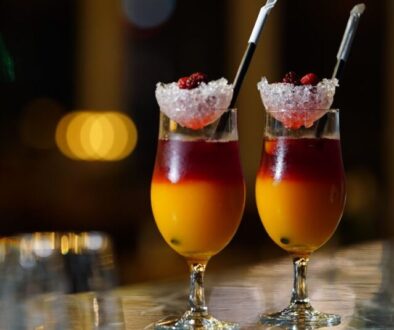
What stands out is not only the recipe but the vocabulary. Sangria and paloma immediately evoke a scene: the aperitivo table, a summer dinner, a party with friends. Moving those names onto a sparkling water shifts the focus from composition to suggestion. The consumer is not being asked to see the product as a lighter or more virtuous stand-in. They are being invited to recognize a familiar code, only in an alcohol-free version.
That is a subtle but meaningful difference. For years, a large part of non-alcoholic messaging leaned heavily on absence. Here, the message works through association instead: a mood, a gesture, a certain idea of conviviality. The mocktail-inspired product does not try to stand out by what it lacks. It tries to enter memory through recognition.
Seasonal occasions and flexible consumption
A third example comes from Germany, where Soda Libre, an alcohol-free brand within the family-owned German group Schwarze und Schlichte, has built seasonal communication around Halloween, Friendsgiving, Christmas and New Year. These are the moments when something is almost expected to be placed on the table and shared. The brand’s recipes lean into that simplicity: a few ingredients, easy serving, and the option to use them neat over ice or as a base for drinks with or without alcohol.
What is especially notable here is the dual use case. The product is aimed not only at people avoiding alcohol, but also at those who want it as a mixer. That broadens its role without forcing a very rigid story onto it. The promise is not to change the occasion, but to make it easier to manage, both behind the bar and at home.
Read together, these three examples do not prove a full-scale shift across the entire non-alcoholic segment. They do, however, point to a recognizable positioning pattern: some brands seem to be entering alcohol-related occasions less as substitutes and more as drinks that fit the social ritual. It is a small difference in wording, but in a market still searching for the right tone, it can be the line between being seen as an alternative and being accepted into the same social scene.