Three signs from Germany on water, soil and reusable bottles
With bottled mineral water, quality does not begin when the bottle is filled. It starts much earlier, in the way the land around the source is managed.
In Germany, the drought in 2025 and the start of 2026 have made water an even more urgent issue. Qualitätsgemeinschaft Bio-Mineralwasser, the association bringing together producers, certification bodies and retailers behind the Bio-Mineralwasser seal, has published data from its digital monitoring tool that point to a clear pattern: organically farmed soils allow higher infiltration than conventionally managed land. In dry periods, that can help rainfall reach groundwater more easily; in heavy downpours, it can reduce surface runoff.
The point is not to turn organic soil into a magic fix. It is to note that protection begins upstream, in how the agricultural watershed is managed. Bio-Mineralwasser has long argued that organic farming reduces the risk of nitrates and agrochemical residues reaching groundwater, and the current water stress gives that argument a more tangible shape, without pushing it beyond what the data can support.
When the supply chain has to hold the line
The second signal comes from distribution. The summer of 2026 put Germany’s mineral-water producers under pressure with prolonged heat waves and consumption levels above the seasonal norm. Some plants worked across multiple shifts for weeks just to keep up.
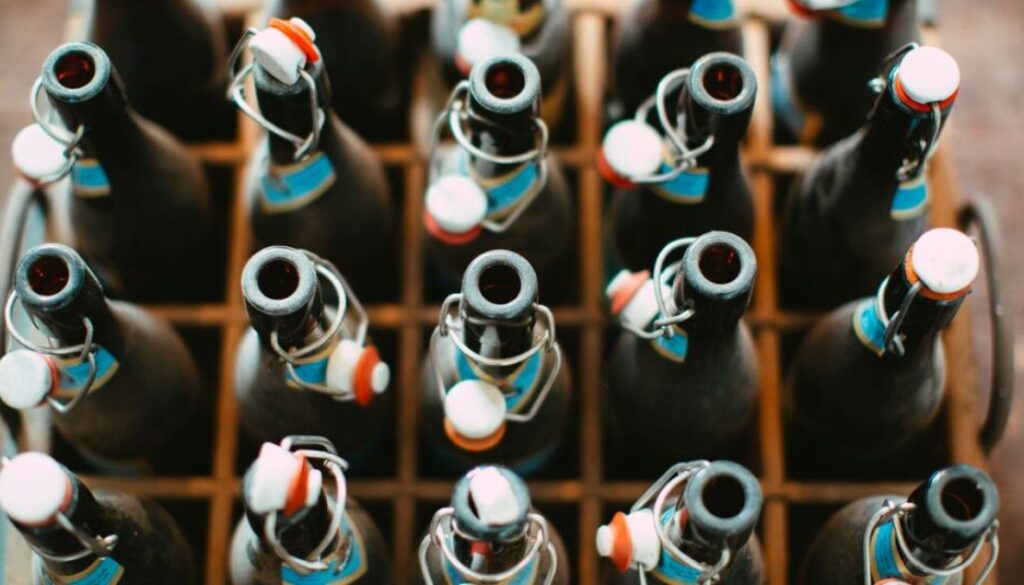
In that context, the returnable-bottle system showed a quality that is often less discussed than its environmental value: operational resilience. In Germany, Genossenschaft Deutscher Brunnen, the cooperative coordinating around 180 companies and managing returnable-container pools, reported fast returns and efficient redistribution across retail and wholesale channels. The mix of formats — returnable glass, returnable PET and closed-loop PET — helped absorb the peak without breaking the flow.
That matters because a reuse system is not sustained by principle alone. It works when, under pressure, it keeps bottles moving back, being washed and re-entering circulation without creating a bottleneck. In that sense, returnables are not only an environmental choice; they are also a way to ease production when industrial capacity is most stretched.
Making the bottle traceable
The third case is the bottle itself. Coca-Cola Europacific Partners Deutschland, the German bottling arm of the group, launched a pilot project in Bad Neuenahr at the start of 2026 and later extended it to the Lüneburg plant. The test covers 0.75-litre returnable glass bottles, including those used for the Apollinaris and ViO mineral water brands, and involves engraving an individual code on each container, readable by AI-assisted camera systems at every stage on the line.
The idea is straightforward, but the implications are interesting: replacing statistical estimates with bottle-by-bottle data on how often a container has been refilled, what condition it is in and when it should leave the loop. The project, developed with glassmaker Vetropack and startup Myneral Labs, received the Deutschen Verpackungspreis 2026 in the digitalisation category. If the test continues to deliver solid results, it could offer a useful reference for other reuse initiatives, although that would still fall short of proving a sector-wide shift.
These three examples do not add up to a finished transformation. They show three different points in the German mineral-water chain: the land that helps protect the resource, the logistics that keep it moving during stress and the bottle that is starting to carry a more readable history. It is a working snapshot, not a verdict on the industry’s future. But it is enough to show where attention is focused right now.