Identity, heritage and fragility: when a historic brewery is worth more than the sum of its parts
There is a paradox that runs through beer: some of the most compelling producers are also among the most economically exposed. Not because they make poor decisions, but because they build value around history, method and a sense of place — three things the market does not always reward in proportion to their importance.
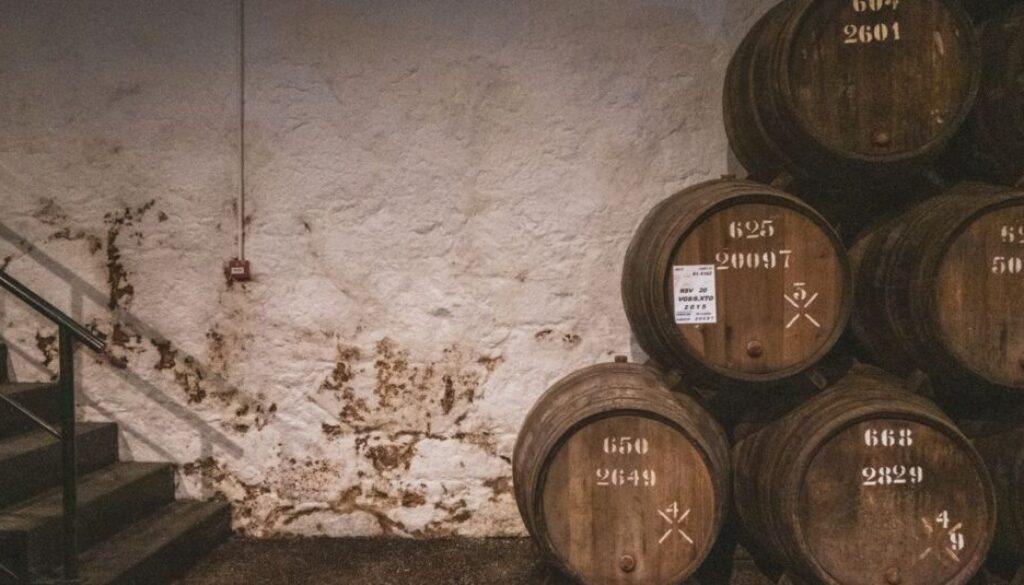
Rodenbach, the Belgian brewery in Roeselare, is a clear example of that tension. Its production relies on large oak foeders and on long aging with wild yeasts, a process that demands time, space and a level of patience that is hardly efficient by industrial standards. Yet that is exactly where its appeal lies: Rodenbach is valuable not because it is easy to scale, but because its character is hard to reproduce anywhere else.
When a model cannot be copied
For breweries like Rodenbach, the real issue is not product quality but cost structure. Every bottle carries years of labour, a material heritage that is difficult to replace and a body of know-how that can only be passed on slowly. After PALM acquired the brewery, investment followed in a new brewhouse, while cellar-based production remained at the centre of the operation. It is a kind of continuity that only works if an owner is willing to support a model that is less efficient than others, but also far harder to imitate.
A different, but equally real, fragility surrounds Privatbrauerei Bolten, a brewery in Korschenbroich in Germany’s Lower Rhine region. The company traces its origins to 1266 and presents itself as the oldest surviving Altbier producer, the dark, cool-fermented style tied to Rhenish tradition. Its owners have launched a search for a strategic partner, with options ranging from a minority stake to a full sale. In 2024, the company reported a loss and showed a weak balance-sheet structure relative to its liabilities.
The issue here is not only the fate of a historic brand, but the pressure facing mid-sized, independent breweries tied to regional styles. In this segment, identity alone does not solve the problems of scale, margins and capital. That is why looking for a partner often becomes less a growth strategy than a way of staying in business.
Brand and place do not always overlap
The case of Kona Brewing Hawaiʻi points to another kind of separation: the distance between a brand’s image and the geography of production. Born in Hawaii as a brewery rooted in place, Kona Brewing later expanded its presence through production outside the islands. When the group that controlled it came under AB InBev, US authorities required the Hawaiian brewing business to be separated, citing market concentration concerns in the islands. Today two distinct entities operate: one independent in Hawaii and another inside a large brewing group, with the Kona brand present in different markets.
It is a reminder that a beer’s name can travel much farther than its original place. The version produced in Hawaii keeps a more direct link to its local setting, including ingredients and water from the islands; the version distributed elsewhere functions more as a brand extension. For many consumers, that difference may remain invisible, but editorially it matters: identity, production and perception do not always line up.
Rodenbach, Bolten and Kona do not tell the same story, and they do not prove a single destiny for historic beer brands. Still, read together, they suggest a question the sector keeps postponing: what is an authentic production identity really worth when it is not easy to scale, and who is willing to support it when the market does not reward it on its own? When an answer comes, it usually involves an external partner, a larger structure or consumers willing to choose on the basis of history as well as price. That is not a guarantee. It is a precarious balance.