Cascade hops, the hop that shaped American beer and is still evolving
Few ingredients have contributed as decisively to the identity of modern American beer as Cascade hops. The variety did not emerge from centuries of agricultural tradition or from a celebrated European terroir: it came out of the USDA breeding program in Corvallis, Oregon, designed to solve a very practical problem. Many U.S. breweries still relied heavily on European hops, which were often expensive and not always easy to source. The goal was to develop a locally grown, disease-resistant variety that could reduce that dependence.
The result was not a straightforward substitute for European noble hops. Cascade had a brighter, more expressive character, with an aromatic profile that was difficult to fully pin down at the time. When Coors, the large U.S. brewing group, bought large quantities of the hop in the early 1970s, its profile fit poorly with industrial lagers designed to stay as neutral as possible. Too much personality for a beer built around the opposite idea.
Cascade nearly stayed on the margins. Then the microbreweries arrived.
The hop the big brewers rejected, and the small ones embraced
In the late 1970s, some early U.S. craft breweries began using Cascade in pale ales. The same intensity that had frustrated industrial producers became the signature of a new way of thinking about beer: more bitter, more aromatic, more alive. It was not just an ingredient, but almost a vocabulary. From there, the hop helped open the door to later generations of increasingly aroma-driven varieties, shaping the sensory language that would come to define American craft beer.
Today Cascade remains among the most widely grown varieties in the United States and is also cultivated in other countries, sometimes under local names. Its relative consistency, compared with many newer varieties, makes it attractive for export and adaptable to growing conditions beyond the cool, wet Pacific Northwest. There is a certain paradox in that trajectory: a hop bred to resemble European models ended up building a recognisable identity of its own.
A later harvest, a different reading of flavor
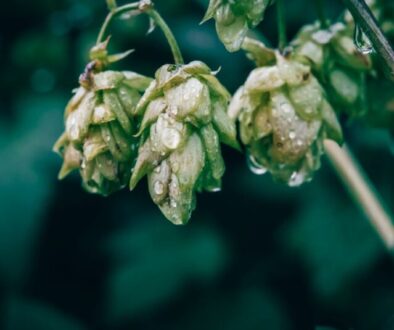
The Cascade story, however, did not stop with its craft-beer breakthrough. In Oregon, Crosby Hops, an agricultural hop supplier based in the state, experimented with later harvest windows, leaving the cones on the bine until late September rather than picking them at the usual time. That approach produced Deep Cut Cascade, a version described as richer in essential oils and with a more intense, citrus-forward aroma.
These hops were the focus of the 2026 edition of Oregon Homegrown, an initiative that brings several Oregon breweries together around a shared ingredient. The value of the project lies less in its scale than in its premise: showing how the same hop can change from one beer to another. Lagers, pale ales and other styles become a kind of distributed laboratory, where malt choice, fermentation and the brewer’s hand create very different outcomes from the same raw material. More than a commemorative gesture, it is a way of keeping Cascade in the present rather than turning it into a historical artifact.
While Oregon experiments, the market tightens
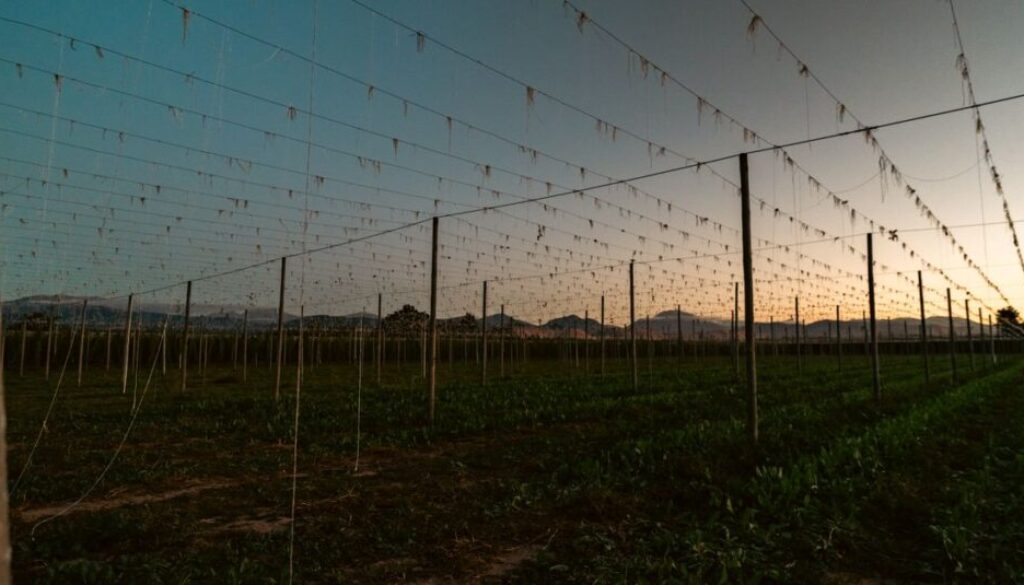
That experimental energy sits against a more fragile backdrop. Germany remains the world’s leading hop-producing country, with roughly one third of global hop acreage, but cultivation has been shrinking for years. Forecasts for 2026 point to another decline in planted area and to a growing number of family farms leaving the sector. Both aromatic and bittering varieties are feeling the pressure of a weaker market.
The reasons are familiar: global beer consumption has slowed, inventories remain high, and for many growers prices no longer cover production costs. This is not only a German issue, but one that runs through the wider hop supply chain. In that context, working with varieties like Cascade through agronomic choices and later harvests does not solve the structural problem, but it does offer a more concrete way to differentiate beyond sheer volume.
Cascade‘s path, from an experimental field in Corvallis to late-harvest experiments in Oregon, is a reminder that hops are not just a raw ingredient. They are also where one idea of beer begins to take shape, long before the first tank is filled.