Pleasure first: how non-alcoholic drinks are changing the script
There is a point when a category stops feeling like an add-on and starts speaking in its own voice. For non-alcoholic drinks, that shift seems tied less to the idea of abstinence and more to the ability to deliver an experience that feels good, personal and memorable. It is not a finished revolution, but it is a clear-enough signal to pay attention to.
Two recent examples, one in the United States and one in Germany, help read that shift from different angles. In one case, personalisation does the heavy lifting; in the other, taste is the deciding factor. In both, consumers are not looking for a fallback option. They want something worth choosing on its own terms.
Dirty soda and the appeal of building your own drink
In the United States, the so-called dirty soda – carbonated drinks finished with flavoured syrups, creamers and other add-ins – has moved quickly from local curiosity to a more recognisable format. Torani, the American syrup company often credited with popularising Italian soda in the United States in the 1920s, has tracked the trend closely. According to company research, awareness of dirty soda among American consumers more than doubled in a year, and roughly two thirds of dirty-soda drinkers also make their own versions at home.
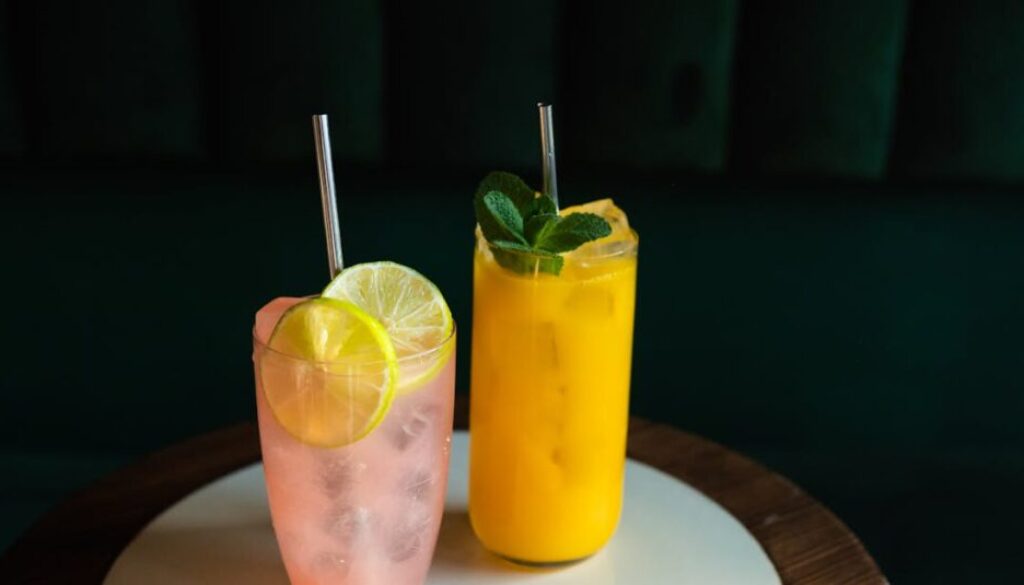
The most interesting part is not the drink itself. It is the way this format turns a soft drink into something assembled to order. You start with a base, then layer flavour, sweetness and texture until the final result feels personal – almost like a no-alcohol version of mixology.
That logic fits a consumer who is used to shaping the product rather than simply receiving it. The most common combinations still lean toward sweet, fruit-forward profiles, but interest is also moving toward richer recipes with tropical or dessert-like notes. Sugar-free options are finding a place too, which suggests that the appeal is not only about indulgence but also about choice.
In the end, the key idea is participation. You are not just drinking a soda; you are building an experience. That is familiar territory for cocktails, but it is now finding space in soft drinks as well, in a language that feels more immediate and less formal.
Functional drinks only work if taste leads
In Germany, the picture is different, but the direction is similar. An NIQ survey commissioned by Valensina, a German group active in juices and fruit-based drinks, shows that functional beverages have now entered everyday consumption for a large majority of respondents. The sample is specific to the German market, so it does not describe Europe as a whole, but it helps read a behaviour that is becoming more visible across several segments.
The crucial point is not how widespread these drinks are, but why they are chosen. In the survey, taste ranks first as a purchase driver, ahead of function, price and naturalness. In other words, the promised benefit may spark interest, but it is not enough to keep the product in rotation if the drinking experience does not deliver. Many consumers also reach for these drinks as a break or for simple pleasure, not only as part of a deliberate wellness routine.
It is a lesson the industry has taken time to fully absorb: function can add value, but it does not replace sensory quality. A drink can be designed to do more, yet it still has to be desirable at first sip and convincing enough to become habitual.
Taken together, these two examples suggest that, in some market segments, non-alcoholic drinks are increasingly seen less as a compromise. Dirty soda tells that story through personalisation; functional drinks tell it through the primacy of taste. They are not the same story, but they meet at the same point: the value of a non-alcoholic drink is increasingly defined by the quality of the experience, not just by what it avoids or promises.
For brands working in this space, the message is fairly clear. The identity of a non-alcoholic drink can no longer be built only on alcohol absence or ingredient transparency. It has to be built on what makes the product genuinely enjoyable to drink. That is where the category still seems to have plenty of room to grow.