Who will grow coffee tomorrow?
Coffee prices have reached record levels in recent years, and Brazil — the world’s leading producer — recorded historically high export revenues in 2025, even as shipped volumes fell sharply. Behind those numbers, though, the people who grow coffee are working in an increasingly fragile environment. The real question is no longer just how much coffee is worth, but who will still be able to grow it in the decades ahead, and under what conditions.
A tougher season in the fields
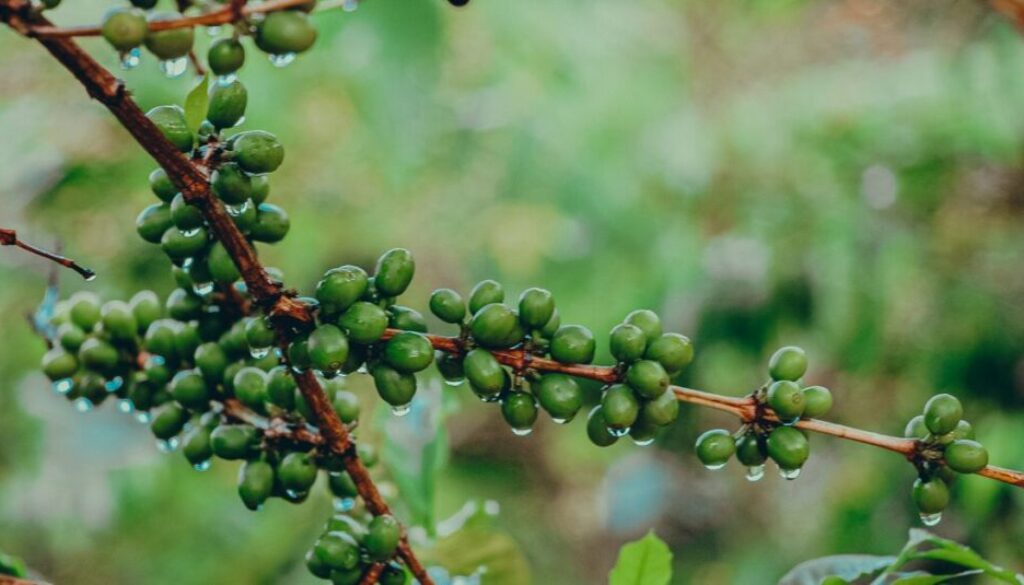
In southern Minas Gerais, a key Arabica-growing area in Brazil, small producers have faced a less predictable climate for years. Drought, frost, off-season rain and sudden hailstorms have made it harder to plan harvests and protect the trees. In some cases, the damage is not only about volume but also about quality: irregular beans, uneven ripening and years that swing sharply between strong harvests and heavy losses.
One response gaining ground is agroforestry, or growing coffee within more complex systems that include trees and other crops. For many producers, it is seen as a way to help stabilize the microclimate, soil and long-term yields. It is not a quick or easy fix, however: it requires investment, patience and technical know-how that many small farmers cannot easily afford.
For those who cannot wait, the options are often narrower — shifting toward more drought-tolerant varieties or scaling back production choices that become harder to sustain under financial pressure. In this setting, the resilience of family farms often depends on a delicate balance between cost, quality and climate risk.
Value still sits downstream
Climate is only part of the story. Labor is another pressure point. In many tropical plantations, finding local workers has become more difficult, especially where agricultural work is seen as physically demanding, poorly rewarded and socially undervalued. The result is growing pressure on those who remain in the fields, while production models struggle to attract younger generations.
Certifications have also shown their limits. They have helped improve some environmental standards and traceability, but they only partially address working conditions and the economic prospects of coffee pickers. For small producers, administrative costs and bureaucratic complexity can make participation far from straightforward.
The Coffee Barometer 2026, a triennial report on sector sustainability, brings together twenty years of observations and reaches a careful but clear conclusion: the recent price surge has not yet delivered lasting gains for smallholder farmers, while a significant share of value still concentrates in the later stages of the supply chain. Those who grow the coffee remain exposed to a disproportionate share of climatic, economic and biological risk, with benefits arriving only in part.
That is not a new discovery, but its persistence matters. Without changing how value is distributed along the chain, sustainability risks becoming more of a language than a real reset. For the coffee world — from importers and roasters to specialty operators — this is not a distant issue. It affects the future availability of quality coffee, the strength of producing regions and the credibility of the stories that accompany each cup.