Shape and function: what the Martini glass really says
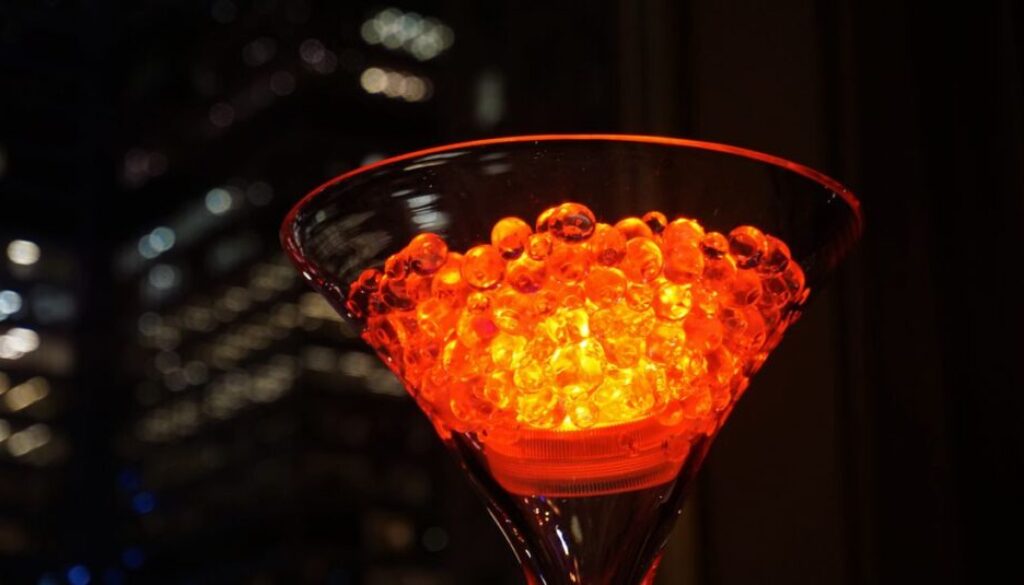
There is an object in cocktail culture that long ago stopped being just a vessel. The V-shaped Martini glass emerged in 1925 at the Paris exhibition of modern decorative arts, in the heart of the Art Deco moment, as a geometric reworking of the traditional Champagne coupe. Since then, it has become something more than a glass: a sign.
Not the sign of a single drink, but of an entire way of drinking. Nightlife, glamour, adult elegance, alcohol in the foreground and a sense of control. Its silhouette is so stripped back that it can be reduced to a few lines and still be instantly recognisable: a rare case of an everyday object entering logo-design territory. Even the cocktail-glass emoji has become a widely recognised visual shorthand for cocktail culture.
A glass designed for a different pace
From a functional point of view, the V-shaped glass has a clear logic. The long stem keeps the hand away from the liquid, while the wide opening carries the drink straight to the palate, cold and concentrated. It was built for small pours, to be finished quickly before the temperature rises. A geometry made for a specific drinking style: direct, dry, stripped down.
That same geometry, however, also exposes its limits. The open rim disperses more delicate aromas instead of guiding them toward the drinker, and the glass is not especially stable in motion, whether in a crowded bar or on a wet counter. It is a shape that favours visual impact and a quick gesture over aromatic protection.
The issue is not only technical. For years, the V-shaped glass carried the semantic baggage of the -tini era, when almost anything vaguely sweet or fruity was presented as a Martini variation. That history has left a mark on how many professionals see it today, and the glass is now often re-read through the classic Martini: gin or vodka, stirred, served ice-cold in a glass that has come straight from the freezer. A simple ritual, but not a trivial one.
The Nick and Nora and a shifting glassware language
One increasingly common response to those limits is the return of the Nick and Nora glass, a historical 1930s format now often read as part of the same cultural moment as the classic Martini. Its more compact bowl, with a narrower opening than a traditional coupe, helps retain aromas better and suits small, precise, very cold cocktails.
Alongside that rediscovery, some bars have started working with glassware designed for individual drinks or for expressing a venue’s identity. Here shape is not only about aesthetics: it helps build a drink’s meaning, guides the drinker’s gesture and sets up an interpretation before the first sip.
The V-shaped glass remains, nonetheless, a symbol that is hard to replace. No other cocktail glass has matched its ability to compress an entire imaginary world into a single silhouette. In film and television, the Martini has often been used as visual shorthand for a certain type of character: elegant, controlled, sometimes ambiguous. That narrative force has left a real legacy in drinking culture, where the glass still works as a stage prop as much as a serving vessel.
The lesson, ultimately, is straightforward: a glass’s shape is never neutral. It carries an era, an aesthetic, a promise. And when cocktails change, sensory expectations sharpen and service becomes part of the experience, the container is also asked to say something new. Not necessarily to change, but at least to make clear what story it is telling.