High-altitude viticulture: Italian cases showing how climate is reshaping wine
In Italian wine, one of the clearest responses to climate change is playing out uphill. Not as a single national strategy, but through a handful of emblematic cases where altitude, water management and appellation rules are being reconsidered together. The result is less a uniform shift than a series of local adjustments that say a lot about where the sector is heading.
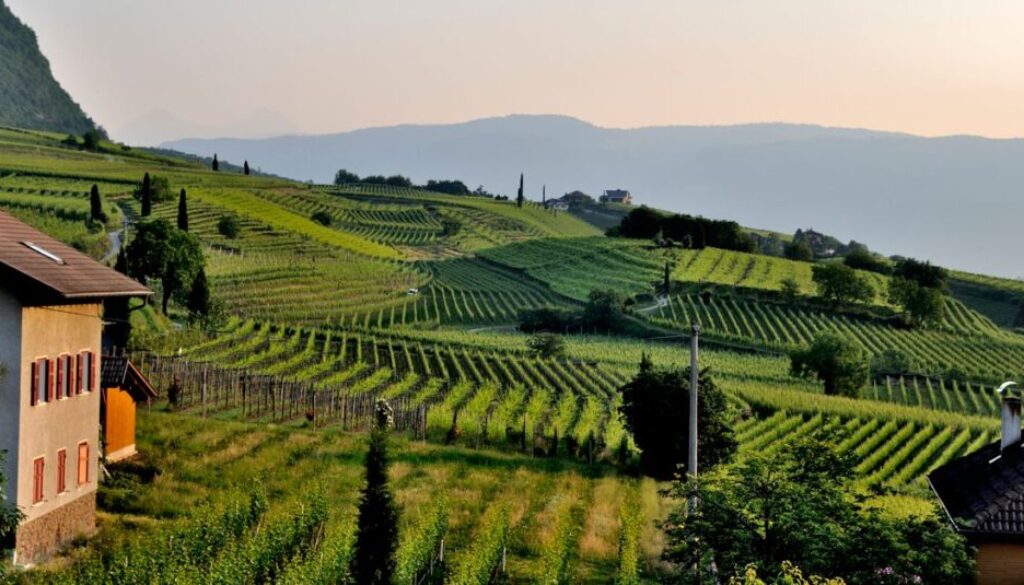
In Valtellina, one of Italy’s most distinctive mountain wine regions, the local consortium is proposing to raise the maximum altitude limit for Rosso di Valtellina DOC and to create four new subzones within Valtellina Superiore DOCG. The proposal is rooted in historical memory as well: aerial photographs from 1975 show vineyards reaching around 1,000 metres above sea level. That elevation is once again viable, and in some areas may prove useful, as producers look for clearer territorial identity and a more precise reading of origin.
This is not only a technical issue. On steep terraces held up by kilometres of dry-stone walls, production costs are inevitably high, and bottle prices have to make sense of that reality. For that reason, the discussion about altitude is also a discussion about language: making each area more visible is one way of helping the wine speak more clearly to drinkers who may not already know the story of Chiavennasca, the local name for the alpine Nebbiolo grown here.
Altitude as a practical advantage
In Trentino, Trentodoc, the region’s metodo classico sparkling wine, offers another model of adaptation. The denomination is produced in vineyards that can sit above 1,000 metres, where altitude helps preserve acidity and freshness, especially in Chardonnay and Pinot Noir. That is not a new stylistic invention. It is part of the territory itself, and climate change is making it more relevant in the wine’s positioning.
At the Trentodoc Festival, the event organised by the Istituto Trentodoc that brings together 73 producers, the conversation also extended to changing drinking occasions. Sparkling wine is increasingly appearing in informal, everyday settings rather than only in moments of celebration. In that context, altitude becomes more than an agronomic detail: it is part of the wine’s cultural appeal.
Earlier harvests, tighter vineyard decisions
Further south, in areas such as Bardolino, Montecucco and Primitivo di Manduria, the pressure takes a different form. In 2026, harvest began earlier than usual and yields were lower than the previous year. In Primitivo di Manduria, production was estimated to be down by about 20% from 2025, while Montecucco required greater attention to water management and emergency irrigation.
The point here is not to turn a difficult season into a slogan, but to show how producers are trying to protect quality while accepting that each vintage now asks for faster decisions. In Montecucco, earlier-ripening varieties such as Vermentino, Syrah and Merlot delivered slightly lower yields but solid results; Sangiovese, which ripens later, needed more care but was still assessed at a good to excellent level by local agronomists.
What links these cases is not a single nationwide redesign of the vineyard map. It is something narrower and more useful: a growing need to read territory more precisely, update regulations when necessary, improve water resilience and rethink vineyard choices earlier in the season. In Italy, climate change is not producing one answer. It is producing a set of local ones, each with its own logic and limits.
That is where the story becomes most interesting. Italian wine is not just harvesting differently; in some places, it is learning to describe itself with more accuracy, whether through altitude, subzones or better water management. The map is not being erased. It is being redrawn one specific hillside at a time.