Aperitivo on trial: formats, aromatics and no-alcohol drinks in premium hospitality
There is a point at which aperitivo stops being just a time of day and becomes a language of drinking. Not necessarily a revolution, more a series of tests: cocktails built in unusual ways, mixers that lean into more distinct aromatics, alcohol-free aperitifs trying to find a clearer role at the table. In these selected examples, the category seems to be moving through incremental adjustments rather than dramatic breaks.
When the drink does away with the usual base
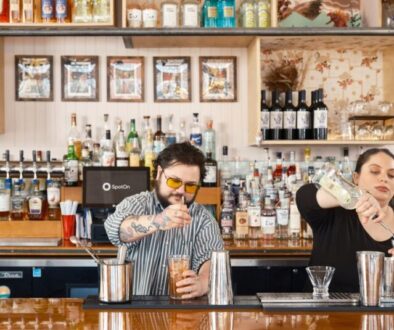
Bar Roza, a cocktail bar that recently opened in Nashville, is co-owned and directed by beverage director Owen Gibler, who developed the Astor concept. The starting point here is deceptively simple: what happens when a drink gives up the base spirit and instead is built around modifiers, bitter elements and balancing components? The Astors are compact cocktails, almost tasting-size pours, combining aperitif and digestif with citrus, phosphate, salt and bitters.
The format works because it does not rely on novelty for its own sake. It relies on precision: smaller servings, concentrated flavor and a structure that makes unusual products easier to read for a broader audience. In that sense, Bar Roza does not stand in for the market as a whole, but it does show how some venues are testing an aperitivo vocabulary that feels closer to tasting than to a standard pre-dinner drink.
The mixer as an aromatic choice
A different kind of signal comes from GOLDBERG, a German premium mixer brand, which has introduced a Lavender version for summer 2026 in a 0.2-l glass format aimed at gastronomy and specialty retail. Here the interesting point is not simply the launch itself, but the decision to make aroma the center of the product.
Lavender brings a specific atmosphere with it: floral character, slower pacing and a more polished serving context. In the glass, a mixer no longer has to remain neutral or merely technically balanced; in some cases it becomes part of the drink’s signature and helps define the occasion in which that drink is served. It is a subtle shift, but one that helps explain how part of the market is searching for clearer identities even in products designed to support other ingredients.
The no-alcohol option looking for a defined role
A similar question, though with a more delicate outcome, applies to Volée Apéritif Naturel, a Berlin-based brand launched in 2021 and distributed in Germany through Wein Wolf, an operator active in the German wine and spirits market. The drink is built on dealcoholized wine, Chardonnay verjus and botanicals with a citrus-and-floral profile, resulting in an alcohol-free aperitif that still aims for aromatic complexity.
What makes the product notable is its positioning: it is not presented as a simple stand-in for what is missing, but as an aperitif with its own identity, tied to a specific drinking occasion. That matters because it shifts the discussion away from alcohol avoidance alone and toward something more useful: whether a no-alcohol product can earn a credible place in service and hospitality.
Taken together, these cases do not prove a stable market shift on their own. But they do suggest a direction: aperitivo is becoming a testing ground for smaller formats, less predictable aromatics and products that seek a more defined role, with or without alcohol. More than a finished trend, it looks like a field of experiments worth watching.