Alcohol-free drinking is gaining ground in more places
There is a point at which something stops looking like a side note and starts taking up a more stable place in the conversation around drinking. For alcohol-free beverages, that point is not fully here yet. But a few recent signals suggest their legitimacy is growing in very different settings: among younger consumers in Germany, on the tasting menu of a fine-dining restaurant in Austria, and in the product strategies of some large beverage companies in the United States.
A generation choosing differently
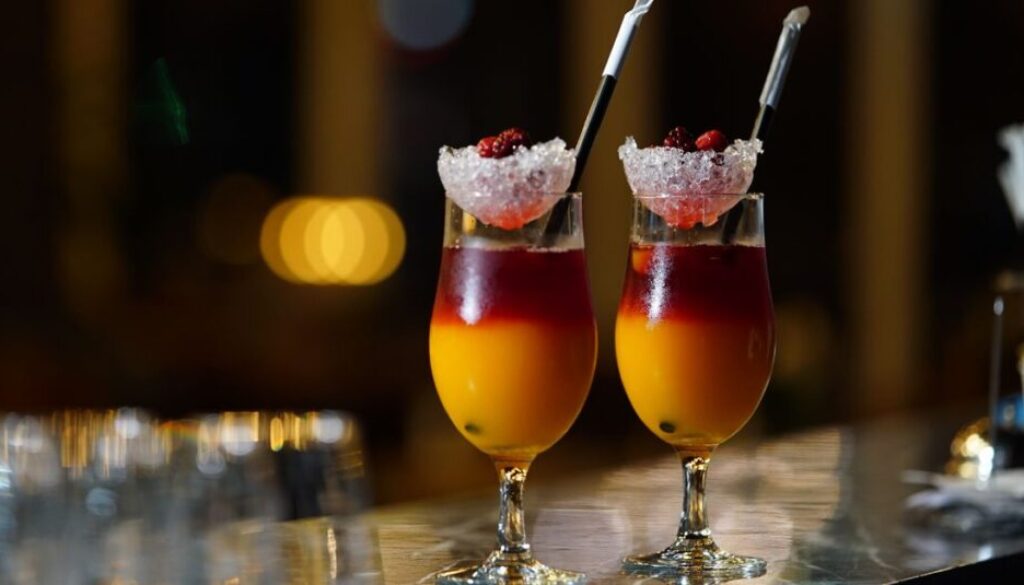
In Germany, recent studies point to rising regular juice consumption among 16-to-26-year-olds. In the same age group, regular mocktail drinking more than doubled in one year, from about one in eleven to nearly one in four. The numbers do not explain everything about changing habits, but they do suggest that for part of Gen Z, alcohol-free drinks are no longer just a practical fallback or an occasional substitute.
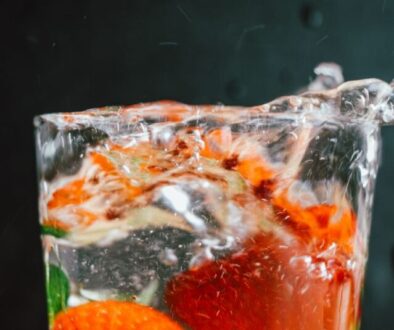
What makes the data interesting is the way the figures overlap. Fruit juice is no longer just a breakfast drink or a habitual choice for many respondents; it is also becoming an ingredient that helps build a drink with its own identity. Nearly half of those surveyed name it as an important mocktail component. That shifts the focus from substitution to composition: the point is not only to remove alcohol, but to create a flavour profile that stands on its own.
At fine dining level, alcohol-free gets a seat at the table
Taubenkobel in Schützen am Gebirge is a two-Michelin-star restaurant with a close connection to nearby Gut Oggau, the Austrian natural-wine estate that has helped shape its wider identity. In that setting, the alcohol-free offering does not appear as a side option, but as part of the restaurant’s overall thinking about the menu.
According to the restaurant review, the tasting menu offers three liquid pairings with each dish, including one alcohol-free option presented on an equal footing with the others. The point matters less for its theatrical effect than for its structure: there is no separate card for non-drinkers, and no sense of a compromise being offered. Instead, the alcohol-free glass is given the same level of attention as wine.
The flavour language is equally considered. Tea provides much of the base, woven together with herbs, fruits and extracts that add acidity, body and aromatic depth. It is not a rigid system repeated in exactly the same way for every course, but a framework that adapts to the kitchen and aims for continuity rather than formula. That is where the alcohol-free pairing stops being a side story and becomes part of the menu’s identity.
One of the more distinctive elements is Gut Feeling, a lightly sparkling botanical drink made by Gut Oggau. It sits within an idea of continuity with the land and the estate’s agricultural practices. Even when the link remains understated, the message is clear: an alcohol-free glass can speak the same language as wine without trying to imitate it.
The value of these examples is not that they prove a fully established new standard. It is that they show alcohol-free drinking can hold its own in places where, not long ago, it would likely have been treated as secondary. When that happens, it is no longer just a technical alternative; it becomes a choice with its own reason to exist.
From restaurant to shelf
In the industrial world, some of the largest beverage companies are reading the same change through a very different lens. Keurig Dr Pepper, the US beverage group, has pushed part of its innovation pipeline toward familiar flavours, nostalgia and new formats, with an explicit focus on younger consumers. That is a corporate strategy, not proof that the market has already shifted wholesale, but the signal is consistent with what appears elsewhere: an alcohol-free drink now needs character, recognisability and a clear reason to be chosen.
Between the juice regularly drunk by a young person in Berlin, a carefully built alcohol-free pairing in a Burgenland restaurant, and a new release from a major American group, the thread is similar. It does not describe a finished revolution. But it does suggest a meaningful shift: in more than one context, drinking without alcohol is gaining room, language and legitimacy.