Status spirits: when price has to earn its place
There is a corner of the spirits market that long seemed unusually resistant to change: the ultra-premium tier, bought as much for the signal it sends as for what is inside the bottle. Even there, though, the ground has started to shift. According to IWSR, status spirits value fell by about 10% in 2025, marking a second consecutive year of decline. The message is not that luxury has stopped working. It is that price alone no longer seems enough.
The backdrop helps explain the slowdown. Trade tensions, macroeconomic uncertainty and weaker consumer confidence have weighed on the category. Cognac was among the hardest hit, especially because of weakness in China, while Scotch held up relatively better. Agave spirits and Japanese whisky, by contrast, showed growth signals, though from very different starting points and on a smaller scale.
Still, the real shift is less about the category data than about the kind of buyer now shaping it. Guy Wolfe, Senior Insights Manager at IWSR for the status segment, describes a consumer who is less easily persuaded by prestige and scarcity on their own. High spending has not disappeared, but it is now put under closer scrutiny: it needs to feel sensible, readable and defensible. In a market built on desire, credibility is becoming part of the value proposition.
More proof, less artifice
That is why authenticity has moved back to the centre. High-end buyers appear less convinced by manufactured scarcity alone and are asking for stronger evidence of quality, provenance and production coherence. Limited editions still belong to the luxury language, but they no longer carry a high price on their own if the story behind them cannot be substantiated.
Age statements still matter in high-end Scotch as a particularly clear and verifiable signal. They do not solve every question, but they offer a practical reference point for buyers who want to compare options and understand what they are paying for. In that sense, they work not as nostalgia, but as a form of clarity.
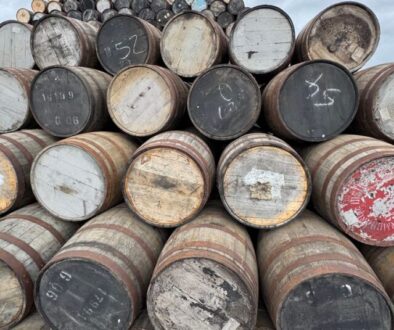
The same principle applies to production choices that help explain a bottle’s premium positioning. Cask finishing, unusual barrel types and more layered maturation strategies can add depth, but only if what ends up in the glass matches the promise. In the status segment, production transparency is no longer decorative. It is part of how price gets justified.
So the picture is not one of collapse, but of selection. Status spirits are still desirable, but they seem to be entering a more demanding phase, where price has to earn its place. For producers and retailers, that means leaning less on abstract exclusivity and more on attributes that can be checked, understood and appreciated over time.