Mocktails and moderation: two different ways of drinking less
There is a difference between someone who gives up alcohol because there is no convincing alternative and someone who deliberately chooses something they genuinely enjoy. It is a subtle distinction, but it matters when looking at how drinking habits are shifting among younger consumers. In the two cases considered here, the point is not to claim a broad reset in drinking culture, but to compare two distinct moderation patterns: mocktails on one side, and alcohol reduction supported by tools and routines on the other.
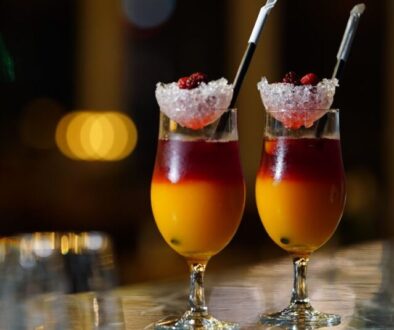
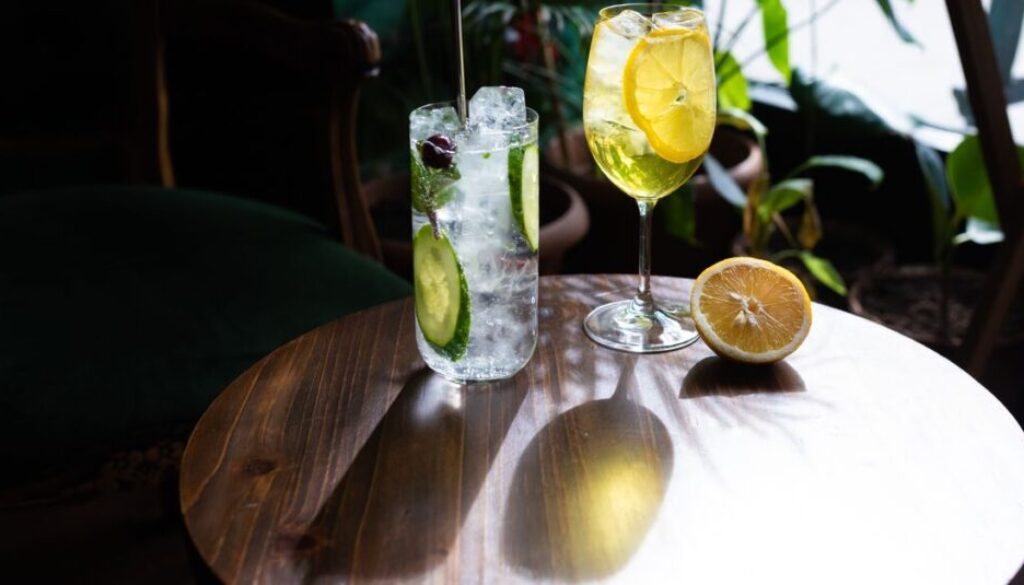
In Germany, mocktails appear to have found firmer ground than many expected a few years ago. According to a YouGov survey in July 2026, about one in four 16-to-26-year-olds said they drink mocktails regularly, up from just over 10% a year earlier. This should be read as a signal from a specific sample, not as a final verdict on the market, but it is strong enough to suggest that for some young consumers non-alcoholic drinks are no longer just a fallback.
Klaus Heitlinger, the director general of the Verband der deutschen Fruchtsaft-Industrie, the German fruit juice industry association, sees that shift as a sign of normalization. In the survey, occasional mocktail drinking declined while regular consumption increased, suggesting greater stickiness among users. Among people in their early twenties, the market also appears to show growing interest in alcohol-free alternatives to gin, rum and vodka for home mocktail use. That does not prove a new paradigm, but it does indicate that the category is moving beyond the simple logic of a bar-order substitute.
In the US, moderation is shaped more by routine than by the party
In the United States, the picture looks different, and perhaps more closely tied to personal habit than to the rise of a new product category. On 4 July 2026, according to the cited report, Independence Day emerged as the summer’s peak drinking occasion, averaging nearly five drinks per person among those who drank. It is a useful reminder that alcohol remains central to many social occasions, especially when collective ritual overrides individual restraint.
At the same time, many users of Reframe, a US-based app designed to help people reduce their alcohol intake, took part in a month-long challenge to cut back or stop drinking. According to Reframe data, users who got through the first alcohol-free week often completed the full month, and the median participant cut consumption by more than half versus the previous month. These figures describe a group that has already chosen to change its habits, not the wider population, but they offer a practical view of how reduction often works: step by step, with regular checkpoints along the way.
In Reframe’s data, nearly half of alcohol cravings are logged between 4pm and 7pm, peaking at 5pm, and the main factor cited is routine. More than social pressure, it seems to be the daily transition that matters: the end of the workday, the return home, the familiar gesture that marks a change of pace. In that sense, drinking less is not only about resisting a social event, but about renegotiating the rhythm of the day itself.
Not one single trend, but two signals worth reading together
Put side by side, these two examples do not point to a single beverage revolution. They suggest two different forms of moderation. In Germany, non-alcoholic drinking among some younger consumers seems to be driven by positive preference rather than pure substitution. In the United States, the shift is mediated by support tools and self-monitoring, with a more behavioural than product-led logic.
For the beverage industry, the interesting question is not whether a global shift has already taken shape, but how these choices are becoming visible in occasions, formats and language. Mocktails may be carving out space as an autonomous choice, not just a version of something else. Moderation, meanwhile, may be taking shape in very ordinary moments of the day and in consumption paths that are far less linear than the simplest narratives suggest. That is probably where part of the non-alcoholic category’s future is being written.