Less sugar, more identity: where the non-alcoholic market is shifting
There is a thread running through much of what is happening in non-alcoholic drinks: sugar reduction is no longer just a defensive response to outside pressure, but is becoming a product choice. It does not apply everywhere in the same way, and it does not explain the whole market on its own, but it is visible in a few segments with some clarity: juices, carbonated soft drinks, and, more recently, alcohol-free beer mixes.
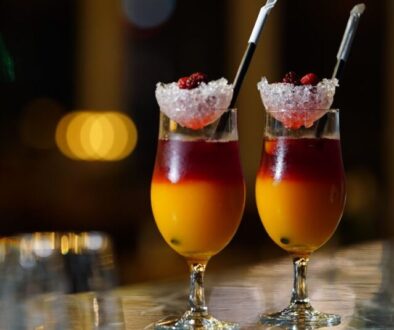
The U.S. juice market is under pressure: volumes are declining and distribution has contracted, with promotional support also weaker. The issue is not only industrial, but perceptual too. Younger consumers are showing more caution toward traditional juices, especially because of sugar content. Holding up better are formats that add something to the base product, whether a functional angle or less expected flavours, from mango and pomegranate to citrus blends.
This is not a collapse, but a repositioning. The brands coping best appear to be those that have shifted the product’s centre of gravity toward perceived utility: not just fruit, but fruit with a function, with a stated benefit, or with a format that fits more easily into a daily routine. In that sense, the ready-to-drink functional channel is tapping into a very concrete need: a drink has to offer a recognisable reason to be chosen, not just another way to quench thirst.
Carbonated soft drinks: the weight of zero sugar
In the carbonated soft drink segment, the dynamic is similar, but the market is more active. In the United States, the CSD market surpassed 55 billion dollars in 2025, with growth concentrated mainly in zero-sugar and diet products, which have outpaced the rest of the category in recent years. Full-sugar colas and fruit sodas have lost share, while zero-sugar versions from major brands and sparkling waters continue to gain shelf space.
The most closely watched development, however, is the rise of prebiotic sodas. U.S. brands such as OLIPOP and poppi opened the door to a functional alternative to classic soda, in a space that now also interests major players. Coca-Cola launched Simply Pop, while PepsiCo developed its own prebiotic line. These products occupy an in-between space: familiar enough not to alienate consumers, different enough to justify a premium price. They remain, however, a niche within a much larger market, and the fastest phase of growth may already be behind them.
Across the carbonated category, another factor remains central: flavour innovation. Seasonal or punchy profiles, from pineapple and black cherry to guava and cocktail-inspired combinations, are mainly there to generate curiosity and social visibility. They do not always build lasting loyalty, but they help create a point of entry for the product.
When a beer mix tries the zero route
An interesting signal comes from Germany. Karlsberg Brauerei, a brewery based in the Saar region, launched two new variants of the Mixery brand in July 2026, Iced Blue 0,0 zero and Cola-Bier 0,0 zero, both alcohol-free and sugar-free. The launch comes with a brand refresh and positioning aimed at a younger audience.
The move is interesting not so much as a standalone novelty, but as a clue to how some social drinking occasions are evolving. According to internal figures cited by Karlsberg, about one in three Gen Z consumers already tends to choose non-alcoholic options in social settings, and the alcohol-free beer mix segment is showing signs of growth in Germany. The goal is not to replace beer, but to hold an occasion — a party, a shared moment — with a product that does not ask consumers to give up either flavour or brand identity.
This is where signals from different categories start to look similar: juices, soda, beer-based mixes. In these segments, consumers cutting back on sugar or alcohol do not seem to be looking for a simple substitute. They want something that stands on its own, with a clear purpose and a recognisable personality. The companies moving most effectively in this space appear to be those that have stopped building products by subtraction — less sugar, less alcohol — and started working by addition: a legible flavour, a clear benefit, a format suited to the occasion.
Rather than describing a single, homogeneous non-alcoholic market, these cases suggest a common direction in a few selected segments: the product needs to make sense on its own. It is still an uneven shift, but a useful one for reading where competition is moving today.