Young wine and aged wine: how to tell the difference
There are moments, standing before a glass of red with garnet reflections and a scent of tobacco, leather and ripe plum, when one wonders whether what is unfolding in the glass is genuine quality or simply old age dressed up as complexity. It is a question worth asking, because time transforms wine in profound ways — but not always for the better.
Understanding what separates a young wine from an evolved one is not an academic exercise. It is the kind of knowledge that changes how you choose a bottle, manage a cellar, or pair wine at the table. And above all, it is the antidote to one of the most persistent misconceptions in the beverage world: the idea that ageing is, in itself, synonymous with quality.
What you see, smell and taste tells the whole story
The first signal comes from colour. As a general rule, a young red wine tends to show violet or purple hues — sometimes quite vivid toward the rim of the glass. These are anthocyanin pigments in their most unstable, intact and expressive form. Over the years, those same pigments bind with tannins and slowly precipitate, pulling the colour from bright ruby toward mature garnet, and eventually toward the orange-brick tones that characterise very aged wines. This is a broad pattern, however, not an absolute rule: the pace and visual trajectory vary considerably depending on grape variety, winemaking technique and oxygen exposure during storage. Nebbiolo, for instance, tends to shift toward brick-orange relatively quickly even in its youth, while some thick-skinned varieties can hold deep reds for many years. White wines follow the same trajectory in reverse: from pale straw with green highlights in a young, fresh wine, progressively toward gold, amber, and finally brown — which often signals advanced oxidation.
The aromas tell the same story in a different vocabulary. A young wine speaks primarily through what are called primary aromas: fresh fruit, flowers, citrus. A young red of good structure can be fragrant with cherry, raspberry and violet. A young white — think of a Sauvignon Blanc — often brings grapefruit, freshly cut grass, white blossom and tropical notes. These are immediate, recognisable scents, sometimes almost exuberant. As the wine evolves in bottle through minimal but constant oxygenation, those aromas gradually give way to more complex profiles: sweet spices, undergrowth, tobacco, leather, cocoa, fruit in spirits, honey. These are the so-called tertiary aromas, which develop primarily through time and bottle ageing. It is worth noting, however, that some comparable notes — such as vanilla or sweet spice — can appear in wines aged in oak regardless of bottle age, so not every hint of complexity is necessarily the work of years.
On the palate, the most immediate difference lies in the tannins. In young red wines, tannins can feel firm and at times rough — a sensation of dryness and slight astringency, especially if the wine has not yet found its balance. With time, tannins polymerise and integrate, losing that rawness and becoming smoother, almost creamy by comparison. The rate of this softening varies depending on tannin type — skin tannins tend to evolve differently from seed tannins — and on storage conditions. At the same time, acidity — a key component in both reds and whites — tends to feel more cutting in young wines. In evolved wines, that sharpness appears to ease: not because the wine’s measured acidity decreases substantially, but because the integration of alcoholic softness, glycerol and more settled tannins creates a rounder, more enveloping whole. It is a shift in perceived balance rather than in chemistry alone.
Evolution is not automatically quality
This is precisely where caution is needed. The most common mistake — even among seasoned wine drinkers — is to confuse aromatic complexity with absolute quality. An evolved wine that smells of tobacco, spice and dried fruit is captivating, but only if that complexity is the result of a deliberate trajectory, built by a wine that had the resources to travel it. If the wine started out with a light structure, low acidity and limited aromatic concentration, evolution does not add depth: it takes it away. What remains is often a flat, tired profile, lacking tension.
Not all wines are designed to age. Many — and this is not a criticism — are made to be enjoyed within a year or two of harvest, when the fruit is alive, the acidity is bright and the drinking experience is immediate and pleasurable. This applies to many unoaked dry whites, most rosés and a range of light reds crafted for everyday drinking: holding onto them in hope of improvement will lead nowhere good. By contrast, wines with high acidity, good aromatic concentration, present tannins and solid structure — such as certain reds from thick-skinned grape varieties or some whites with a long cellaring tradition — can go through years of bottle evolution and arrive at something genuine and rarely replicable in youth.
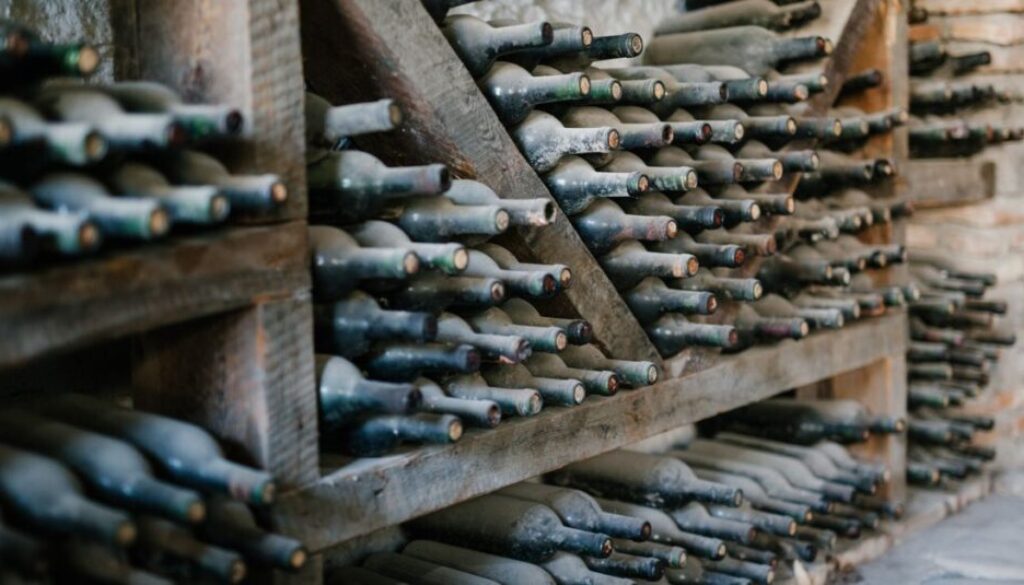
One factor often underestimated in this equation is storage. Even a wine with every structural quality needed for long ageing can arrive at its destination in disappointing condition if it has been exposed to unstable temperatures, direct light or prolonged vibration. A wine’s trajectory depends not only on what is inside the bottle, but on how carefully that bottle has been kept over time.
Professional tasting accounts for all of this by treating the evolutionary stage of a wine as a separate dimension from its qualitative assessment — an approach reflected in sommelier tasting sheets, guide scores and drinking window recommendations from producers and critics alike. A wine can be young and already excellent, or mature and merely decent. It can be evolved in a harmonious way, or simply old — meaning the best has already passed. Recognising which situation you are in is the real objective.
- Young — vivid colours, primary fruit and floral aromas, edgy tannins; still has an evolutionary arc ahead, but at this stage may feel unbalanced or closed.
- Ready — acidity and freshness still well present, but with a more integrated softness; enjoyable now and, in structured wines, may still develop over the medium term.
- Mature — at the apex of its arc; tertiary aromas developed, tannins smoothed, components in balance; the ideal moment to open the bottle, but the window closes.
- Old — the wine has passed its peak; it may still be interesting, but shows signs of aromatic and structural fatigue; further waiting will not improve things.
Training your eye — and your nose
Recognising where a wine sits in its evolution is a skill that sharpens over time, but there are practical starting points. The colour at the rim is one of the most reliable: in young reds it tends to be sharp and vivid, while in evolved wines it gradually turns orange or brick. This holds regardless of the intensity at the centre of the glass, which depends heavily on the grape variety and the winemaking approach.
On the nose, it helps to ask whether the aromas belong to fresh fruit or to something more transformed. A note of crunchy cherry tells a different story than cherry in spirits or blackberry jam. Neither is inherently better — it depends on the context, the style of wine, the intended pairing. But being able to tell them apart allows you to understand where the wine stands in its life.
On the palate, a useful exercise is to pay attention to what lingers after swallowing. A young wine often leaves a fresh, sometimes slightly dry and tannic finish. An evolved wine leaves a longer, softer persistence, often with spiced or toasted undertones. If the sensation is flat and fades quickly, with no warmth or structure, the wine has most likely already passed its best moment.
One final practical suggestion: tasting two different vintages of the same wine side by side — one young, one with a few more years behind it — is the most direct way to calibrate your palate to what actually changes. No glossary of terms is required, no manual. Just one glass next to another, and the willingness to observe without assumptions.
Time is a fundamental variable in wine, but it is not a guarantee. Every bottle has its own curve, and learning to read it in the glass — not just on the label — is perhaps the most honest thing one can do in relation to the person who made it.