Matcha between ceremonial heritage and new ready-to-drink formats
In the tea world, matcha now occupies a place that is easy to spot but less easy to define. It appears on café menus, in more contemporary shelf formats and, increasingly, in ready-to-drink versions. This is not a straight line or a clean break; it is the sign of a category finding new ways to be seen.
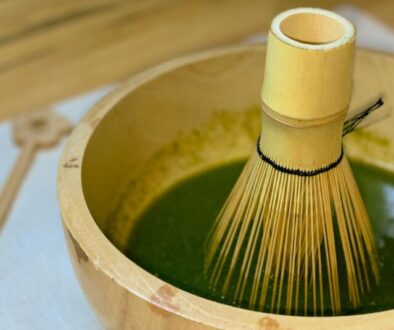
To understand that shift, it helps to go back to the beginning. Matcha’s origins are traced to China, and to the tea culture that developed during the Song era, when powdered tea was whisked in hot water until it formed a dense, stable foam. Quality was judged there too: by the texture of the foam, by the precision of the person preparing it, by the clarity of the technique. When the practice reached Japan, it gradually became more codified and eventually fed into the Japanese tea ceremony.
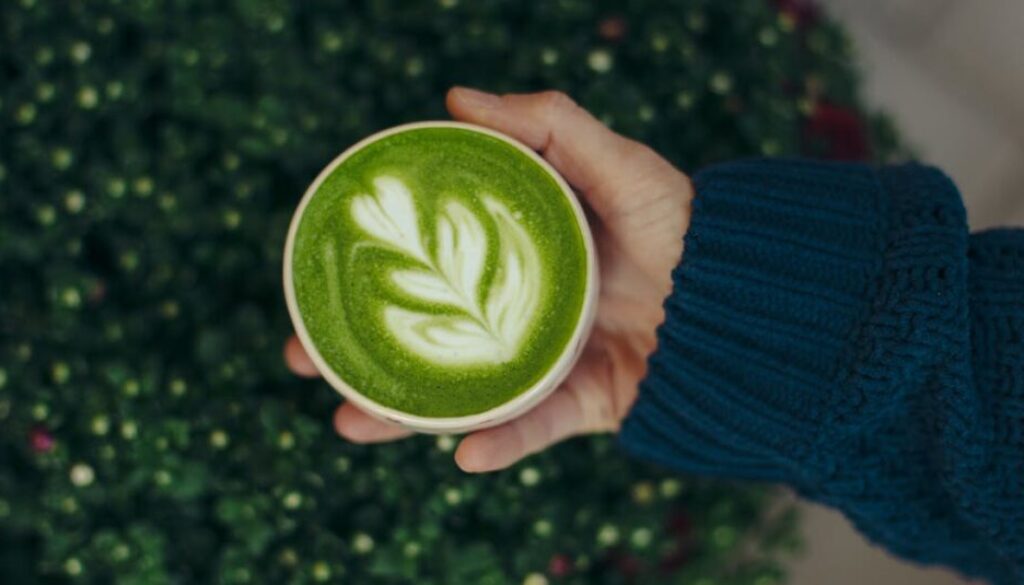
That distance between origin and contemporary form is useful for reading the present as well. Today, matcha is often consumed in combinations the tradition did not really anticipate: with plant-based milk, with sweeteners, or inside a can ready to drink. This does not necessarily amount to a rupture, but it is a transformation worth watching closely.
A flavour that needs mediation
Matcha has become more visible in several Western markets thanks to two parallel narratives: on one side, the Japanese-inspired image; on the other, the language of functional food. Together they have broadened interest in the ingredient, even if they have not always built long-term familiarity.
One of the barriers most often mentioned by people in the sector is taste. Quality matcha has an herbal, mildly bitter profile, which may feel less immediate for consumers used to sweeter, rounder drinks. That is also why the ready-to-drink segment has found space: it makes matcha more accessible, lowers the entry barrier and brings it closer to everyday consumption.
That is where MBG Group, a European brand incubator headquartered in Germany, comes in with Matchami, a matcha and oat ready-to-drink in a 250-ml can. The product is positioned as an alternative to coffee and energy drinks, with a vegan formula and distribution aimed at multiple channels, including retail, hospitality and e-commerce. It is a fairly clear example of how an ingredient perceived as specialist can be reframed for a wider audience without completely losing its original identity.
But the story is not only commercial. Every time a product like matcha enters a simpler, more immediate format, the way it is narrated changes too. The grammar of ritual gives way to the grammar of everyday use, and the two languages end up coexisting more than colliding.
Premium and accessible can coexist
Alongside this push toward convenience, matcha still lives in a more traditional and premium dimension. Shade-grown cultivation, tencha processing and the final milling that turns the leaves into a fine powder remain central. So do tastings, sensory education and the tea ceremony as cultural and technical reference points.
For that reason, coexistence is a better word than replacement. Traditional formats and more accessible ones do not describe two entirely separate markets, but two different ways of approaching the same ingredient. The first emphasises preparation, memory and ritual; the second focuses on simplicity, speed and everyday use. Between those two poles, much of today’s interest in matcha is taking shape.
That is where its recent evolution is clearest: not as a uniform boom, but as an expansion of function. Matcha remains tied to a precise heritage, yet it is now finding room in lighter, more immediate forms that fit more easily into daily habits. How long that trajectory lasts will depend on a delicate balance: keeping the product recognisable without making it too distant from the people discovering it for the first time.