Vernaccia di San Gimignano in Rome: a new AIS event
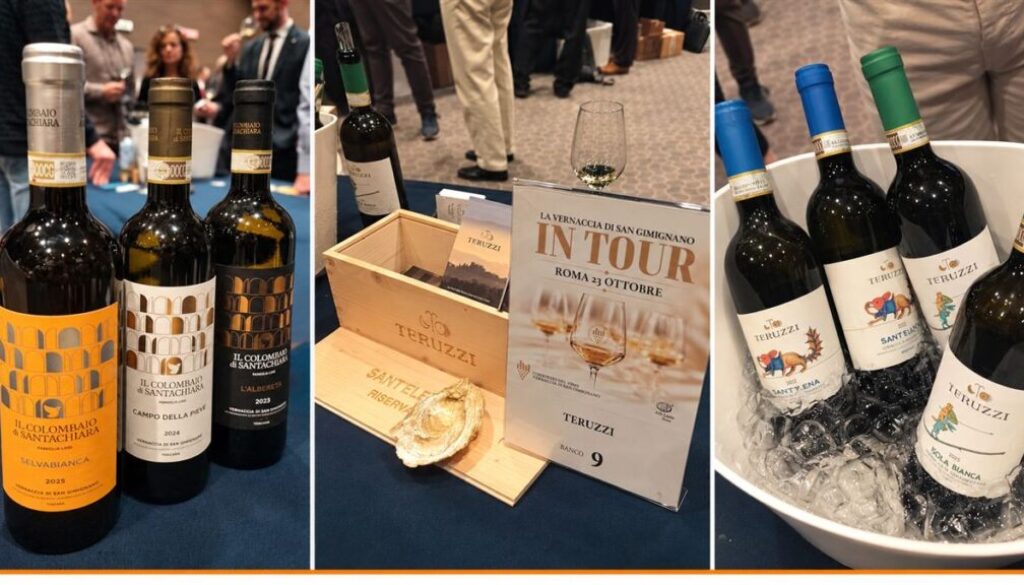
How much does a wine change with its vineyard and the time it spends in the cellar? On Friday 23 October 2026, an AIS Lazio event with Vernaccia di San Gimignano DOCG producers at the A.Roma Lifestyle Hotel offered a useful way to explore that question. We were there.
Entry was free, with advance booking. A good number of excellent producers from the area were present at the tasting tables. It was an opportunity to explore Vernaccia in depth, comparing interpretations of the same grape and discussing them directly with the people who grow it and make the wines.
Where should the comparison begin?
The producers generally brought three different bottles of Vernaccia to taste: their standard wine, a selection and a riserva. For the standard wines, the reference vintage was 2025.
This event format made the tasting particularly useful: visitors could compare the different labels from each winery, then move from one producer to another to explore their respective choices.
The work behind the selections was one of the most interesting aspects of the event. Increasing attention is also being paid to the individual vineyard, the characteristics that set it apart and the possibility of expressing them in the wine.
These selections essentially reflect an exploration of individual crus. The term refers to a specific vineyard with an identity of its own.
What does Vernaccia riserva mean?
For Vernaccia di San Gimignano, “riserva” is a designation defined in the production rules. The text prescribes at least eleven months of ageing from 1 January following the harvest and a period of three months in bottle before release.
Ageing in wood is an option, rather than a requirement. The choice of vessel is left to the producer, which is another reason to ask how a particular riserva was aged.
A ten-year-old Vernaccia
One thing surprised me a great deal: some of the riservas had reached as much as ten years of age and remained very interesting wines in the glass. That is a considerable period for a white wine, and a useful indication of how long a Vernaccia can develop.
The grape’s acidity does help support that ageing potential. Naturally, the vintage, the producer’s work and bottle storage also matter. Ten years is not a promise that applies to every label.
Questions to take to the tasting table
An event with the producers that focuses so closely on a particular grape makes these differences easier to discuss. Visitors can compare bottles, ask which vineyards they come from and understand what the winery aims to achieve with each label.
A tasting like this certainly makes you want to set aside a few bottles of Vernaccia to open in a few years’ time. The difficult part, perhaps, will be resisting the temptation to drink them straight away.