Climate, markets and appellations: different signals for Italian wine
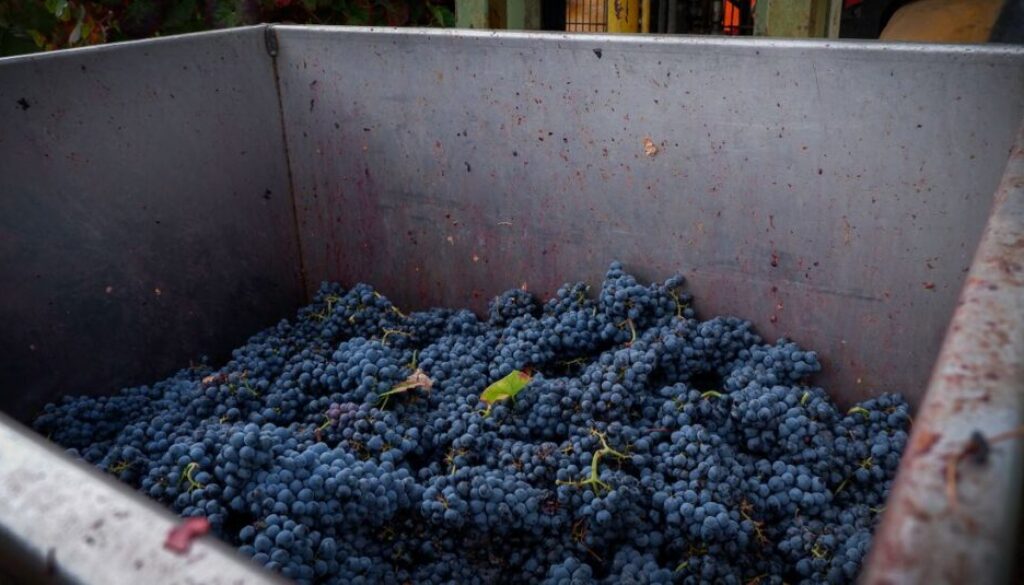
The summer of 2026 brought an unusually early harvest to several parts of Italian wine country, one of the clearest signs of an anomalous season. Heatwaves pushed grape ripening ahead of the usual calendar and, in some areas, picking began at a pace that growers would normally associate with much later in the year. A similar pattern was visible in France, where harvesting started in some places in the second week of August.
What matters here is not only the date on the calendar, but what it says about the vine cycle. In South Tyrol, the local wine consortium described the start of harvest as exceptionally early for the denomination. The reason was not just the summer heat: spring had also been unusually mild, which accelerated the vine’s development. The colder spell that followed did little to offset the shift. For many producers, grapes destined for sparkling base wines were already in the cellar before summer was fully over.
Pressure is coming from more than one side
Climate change remains the most visible factor, but it is far from the only one shaping the sector. Legacoop Agroalimentare, the Italian cooperative association representing a large number of wine producers, has pointed to a combination of pressures: more fragile yields in hillside vineyards, still-high energy and logistics costs, less predictable export markets, and changing consumer habits, especially a growing interest in lower-alcohol styles.
On the commercial side, the United States remains a delicate market for Italian exports. In the first weeks of spring 2026, US imports of Italian wine were down compared with the previous year, in a context already shaped by tariffs and wider trade uncertainty. At the same time, there are more encouraging signals from Brazil, where Italian wine saw growth in the first half of the year in both volume and value, reinforcing the country’s role as an interesting outlet for some European appellations.
Many cooperative wineries are also paying closer attention to the shift toward lighter styles and lower-alcohol products. Dealcoholised and partially dealcoholised wines, once a marginal category, are now beginning to appear in more structured development plans. This is not a full-scale transformation yet, but it does suggest that the market is no longer moving only around traditional models.
Etna Doc, a region moving on a different track
Against that background, some appellations tell a more dynamic story. Etna Doc, the Sicilian denomination that has gained international visibility over the past decade, has followed a growth path that runs counter to the broader softness in wine consumption. In recent years, certifications have risen sharply, the number of growers involved has increased substantially and annual certified volumes have passed the forty-thousand-hectolitre mark.
Even more notable is the stylistic direction of that growth. Etna Bianco, long treated as a secondary category behind the red, has been gaining ground. Sparkling wines, while still a small share of production, have also accelerated. The trend fits the preferences of an international audience looking for wines that are fresh, taut and recognisably shaped by place, with the volcanic character of the territory coming through clearly in the glass.
Wine tourism is adding further momentum. Etna continues to draw interest and visits, helping the denomination build visibility and direct demand. It does not yet carry the commercial weight of more established regions, but it has developed a strong reputation and a fairly solid internal production chain, with many wineries handling vinification and bottling in-house. That is one reason the area speaks with a coherent voice, while the wider Italian sector appears more exposed to different forces that are not always easy to align.
Italian wine, in short, is not moving in a single direction. Climate, costs and trade uncertainty are all in play, but territories like Etna show that a strong identity can still attract attention and demand. Rather than a uniform picture, the current moment looks more like a patchwork map, where each appellation faces similar pressures but arrives at very different outcomes.