English Viticulture: What Does 2026 Have in Store?
When people talk about European viticulture, the United Kingdom is certainly not the first country that comes to mind. Yet in recent years the picture has changed remarkably fast. New vineyards keep being planted, investment keeps growing, and areas that would have been considered marginal for grape-growing just a few decades ago are turning into genuine commercial production zones.
Today the UK has around 4,841 hectares under vine, with more than 1,150 registered vineyards. Production remains heavily concentrated in southern England: Kent and Sussex alone account for over 2,300 hectares, followed by Essex and Hampshire.
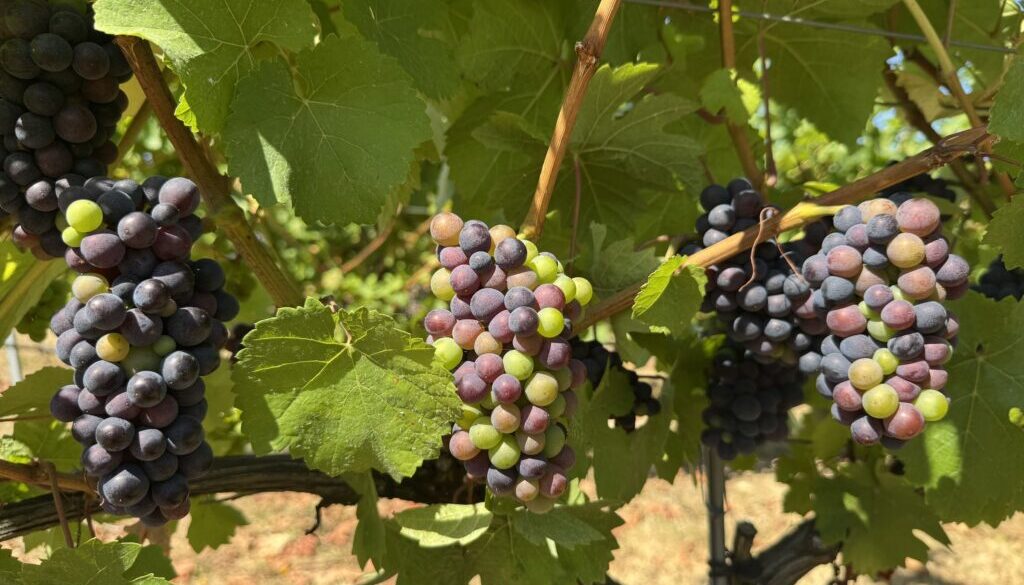
Chardonnay and Pinot Noir dominate English vineyards
The breakdown by variety says a lot about what English viticulture has been aiming for so far.
Chardonnay is the most planted variety, with around 1,498 hectares, followed by Pinot Noir with 1,370 hectares and Pinot Meunier with 411 hectares. Next come Bacchus with 334 hectares, Seyval Blanc with 123 and Solaris with 117.
Chardonnay, Pinot Noir and Pinot Meunier together account for over 70% of the recorded planted area by variety. That’s no coincidence: these are the three classic varieties used for traditional-method sparkling wine, which remains one of the strongest suits of the English wine industry.
The picture is still evolving, though. Bacchus has taken on a significant role in white wine production, and alongside the main varieties there’s a wide range of grapes grown on smaller plots.
A sector that keeps attracting investment
The most striking thing about English viticulture is probably not yet the volume of wine produced, but the speed at which the sector is growing.
In 2025 there were 1,158 registered vineyards and 280 wineries. Actively productive vine area stood at around 4,358 hectares, with a further 500-plus hectares of young vines not yet in production.
That means part of the investment made in recent years still has to fully translate into output.
The 2025 harvest showed what can happen when these vineyards meet favourable weather: more than 16.5 million bottles were produced, up 55% on the previous year.
The real limit is still the market
Such fast production growth needs to be matched by an equally strong rise in demand.
And this, in my opinion, is where one of the main weaknesses of English viticulture shows up.
Making wine in the UK is expensive. A bottle of English sparkling wine often carries a high price tag that can easily go beyond £25. British consumers, however, shop in one of the most open wine markets in the world.
If I want to buy a good wine, I can choose a bottle from Italy, France or Spain, often spending a lot less and relying on regions and appellations with a much longer production history.
That doesn’t mean high-quality wine can’t be made in England — quite the opposite: quality has improved enormously in recent years. But it remains hard to compete on value for money with countries that have been making wine for centuries, generally enjoy more favourable growing conditions and run production chains on a far larger scale.
One consequence of this rapid growth in output has been sizeable wine stocks piling up in cellars. After a 2025 harvest of more than 16 million bottles, the challenge for the sector isn’t just producing more, but actually selling what’s already been made.
2026 and the 12 May frost
On 12 May 2026 a severe late frost hit the UK, damaging a wide range of crops. Viticulture was among the sectors affected, at a particularly delicate stage since the vines were already in full growth.
The damage varied enormously from site to site. Some vineyards were largely spared, while other producers suffered very heavy losses — in some cases around 50%, and in the worst-hit plots, close to a total wipeout.
For individual producers, that obviously means a huge economic hit.
At sector level, though, a smaller 2026 crop could have an indirect upside: it may help avoid a further sharp rise in cellar stocks after the previous bumper harvest, giving the market more time to absorb the wine already sitting in tank.
Less fruit, but potentially exceptional quality
While 2026 could go down as a weak year in terms of volume, the picture on quality could turn out to be entirely different.
After the frost, the season brought high temperatures and conditions particularly favourable to ripening. For long stretches the vines saw temperatures well above what’s historically associated with English weather, at times resembling conditions found in the warmer wine regions of continental Europe.
On top of that, in vineyards hit by frost but not wiped out, yields are lower — and when leaf area stays efficient, fewer bunches mean the vine can concentrate more of its resources on the fruit that’s left.
The weather is also pushing phenology forward significantly, and several vineyards are now looking at a harvest around two to three weeks earlier than a normal year.
For those who make it to harvest with enough fruit, 2026 could therefore deliver exceptionally high-quality raw material.
That may well be the great paradox of the English 2026 vintage: a year that could be remembered as weak on quantity, but one that might save itself — and perhaps be remembered — for the quality of the wine it produced.