Coffee and health: the market’s new vocabulary
There is a point where scientific research stops living only in journals and conferences and starts entering the language of the market. In coffee, that shift is especially visible: new findings, institutional statements and industry readings are giving producers and roasters a different vocabulary for talking about a cup.
The American Heart Association, one of the leading medical organisations in the United States, has recently published a scientific statement on the relationship between caffeine and cardiovascular health. The message is deliberately cautious: moderate consumption — roughly 4 to 5 cups a day for a healthy adult — is generally considered compatible with cardiovascular health, but it should not be read as an invitation to drink more. Some observational evidence links regular coffee intake to a lower risk of heart failure; for other outcomes, including stroke, the picture is less clear.
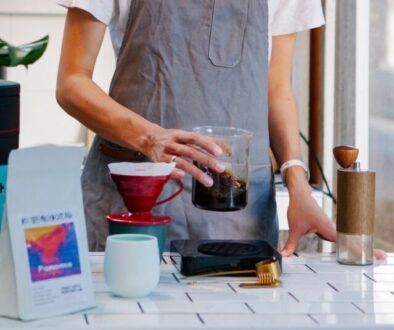
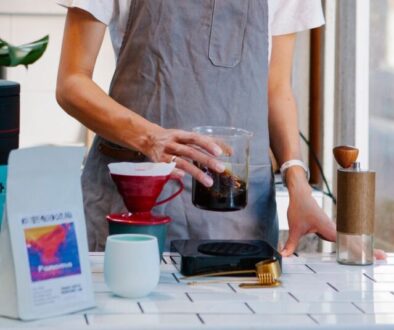
For anyone watching the beverage sector, the more interesting point is elsewhere: not every cup is being interpreted in the same way. Paper-filtered coffee is different from espresso, French press or boiled coffee because those methods retain compounds such as cafestol, which are associated with higher LDL. It is a technical distinction, but one that is now moving more naturally into the public conversation and helping explain why extraction method is less of a specialist footnote than it used to be.
The filter as a lens
Another study, led by a Chinese university team and based on large European datasets, suggested a possible microbiome-mediated pathway between unsweetened filtered coffee and lower HbA1c. The work points to a plausible mechanism involving gut bacteria and short-chain fatty acids, but it should be read with caution: it is still a single study, with the usual limits of this kind of analysis.
The most relevant detail is that, among the different consumption patterns examined, only filtered coffee came out as significant. More than offering a definitive answer, the study strengthens two research lines the category is increasingly following: the role of preparation method in shaping the drink’s composition, and the interaction between coffee and the gut microbiome. In other words, the filter is not just a technical step. It changes the way coffee is read, not only the way it tastes.
All of this arrives at a time when the coffee market continues to move, but not in a single, linear direction. In the United States, some retail data point to growth in several segments, including ground coffee and single-serve formats. That is a useful signal, but not enough on its own to describe a uniform transformation of the category. More accurately, it suggests that consumption remains solid while occasions and product promises keep diversifying.
Between function and identity
According to some market analyses, a growing share of consumers is looking for information about ingredients, preparation and effects when choosing coffee. Functional coffees with adaptogens, mushrooms or collagen fit into this broader demand for products perceived as more functional, as do offerings that stress method transparency and product identity. The point is not that every cup should promise wellness. It is that today’s consumer seems more willing to read coffee as something with a function, not just a habit.
For producers and roasters, that opens an interesting space. Filter coffee in particular can be framed through taste, origin and extraction, but also as a choice that aligns with closer attention to the drink’s profile. That does not mean turning it into a health claim larger than the evidence allows. It does mean recognising that the preparation method now carries a narrative weight it did not have to the same extent a few years ago.
That is where science and market truly meet: not in a sweeping claim about coffee as a solution, but in the building of a more precise language around what a cup can be. And the fact that this precision passes through the filter says a great deal about how the category is changing its vocabulary, before it changes its taste.