Wine, Visual Culture and AI: A Conversation with Mila Pape
AI is changing how wine brands create images, videos and visual content. The tools are becoming faster and more accessible, but a more basic question remains: what happens when everyone can produce more and more content?
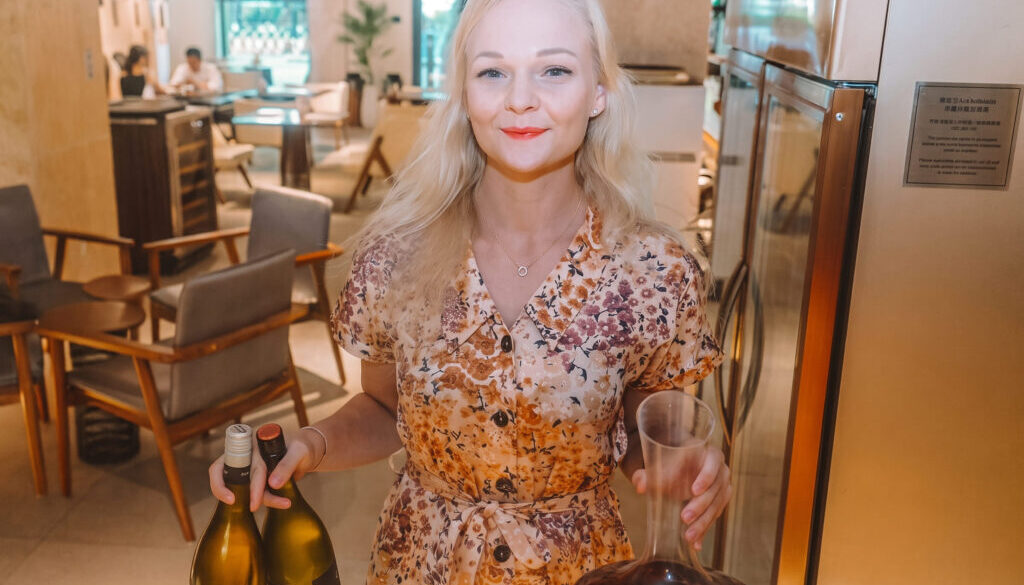
At Beverella, we wanted to look at the issue from the perspective of someone working between wine, visual communication and different cultural markets. We spoke with Mila Pape, founder of Wine Sonder, a creative studio producing AI-assisted visual content and motion design for wine and beverage brands.
With a WSET Level 3 Award in Wines, a Barossa Wine School Specialist Certificate, and over a decade working across wine markets in Asia, Europe and Australia, Mila brings wine expertise and cultural fluency to a field that is changing faster than many producers realise. We asked her what strong visual communication means today, where wineries still get it wrong, and what AI can — and cannot — bring to wine storytelling.
Before founding Wine Sonder, what was your personal path into wine?
My first professional encounter with wine came just after university, when I was brought in to work on brand strategy for Silver Heights, a winery in China’s Ningxia region. The brief was genuinely interesting: how do you position wine from a place nobody yet recognised as a wine region, at the very moment China was becoming one of the fastest-growing import markets in the world?
What I didn’t expect was how much the work would shift once I actually arrived at the winery. Brand strategy on paper sits at a comfortable remove from the product itself. Then you meet the family, understand why they chose that particular piece of land, and see what it actually takes to make wine there. The romance falls away and something truer takes its place. Silver Heights is internationally acclaimed now, which is wonderful to see. But what stayed with me was the gap between how a wine lives in the people who make it and how it tends to be communicated outward.
After that I worked with a niche importer focused on notable French estates, then with a large Chilean wine group. The common thread across all of it was translation: taking what a wine and the people behind it genuinely represent and communicating that across markets, languages and cultural contexts. Wine Sonder grew directly out of noticing how much gets lost in that process, particularly at the visual level.
What does strong visual communication mean in this sector today?
There’s a real gap between how consumers actually make decisions about wine and how most wineries communicate with them. The majority of wine communication is still oriented around the trade: it speaks in the vocabulary and visual codes of buyers, sommeliers and industry professionals. Which has a long logic behind it. But it leaves out the person standing in a shop or scrolling through Instagram at 9pm trying to decide whether a bottle belongs on their table.
The challenge is that the visual clichés of wine, the cellar, the vineyard, the glass at golden hour, exist for a reason. They’re beautiful. But beauty without distinctiveness is just noise. A consumer looking at twelve winery accounts sees essentially the same visual register across all of them, and the wine, which is usually extraordinary, gets completely obscured.
The brands getting this right tend to fall into a few categories. Those with a clear brand platform where the visual language is consistent enough that you’d recognise a post before you see the name, Cloudy Bay and Penfolds being obvious examples at scale. Then the categories that were never trapped by wine’s authenticity conventions in the first place: non-alcoholic producers, newer packaging-forward labels like Poco Vino, and spirits and bar culture, which have always been willing to play. Ghia is a useful reference point for what intentional visual identity looks like in a beverage context.
What’s also shifting is who’s closest to the consumer. Some wine communicators have figured out how to talk about wine in a way that connects rather than gatekeeps. Hannah Crosbie is a good example of that tone. And some importers like SommSelect are doing genuinely interesting work with content because they’re in direct conversation with the person buying the bottle, not the trade buyer.
The common thread across all of them is that visual decisions came after a clear answer to a more fundamental question: who is this for and what do we want them to feel? For many wineries that foundational work hasn’t happened yet, so the brief becomes «make us content» without a defined audience, a channel strategy or a positioning. That’s why content feels hard to make and doesn’t land when it goes out. And it becomes genuinely overwhelming for smaller brands who are already running on limited time. The visual layer is the last thing to build, not the first.
What are the most common mistakes you see when wineries present themselves visually?
The most common one is talking about the wine rather than to the person who might drink it. Awards, scores, heritage, technical detail. All of it is real and matters to the producer, but none of it creates a connection with someone who hasn’t opened a bottle yet. Phrases like «family-owned sustainable winery» appear on so many accounts that they’ve stopped communicating anything at all.
The second is borrowed visual language: copying what larger wine groups do because it appears to be working for them. It usually isn’t, and it definitely doesn’t work for a boutique estate trying to build a direct relationship with its own audience.
Then there’s the reality that organic reach is now the primary lever for most smaller and medium brands, because paid media has become genuinely inaccessible at the budgets most independent wineries have available. That means the quality of what you put out matters more than ever. But many brands are still in the mindset of «we have photos, we need to post something.» Volume stopped being a differentiator a long time ago. It’s become very easy to produce content. That’s the problem, not the solution.
How is AI changing the way visual content is created for wine and beverage brands?
AI is making content creation accessible to wine brands that previously couldn’t afford professional photography or video at any useful scale. That’s a real shift, and for smaller estates it opens up possibilities that simply didn’t exist before.
The risk is that everyone now has access to the same tools, which tends to produce the same results. A prompt-generated vineyard at golden hour looks like every other prompt-generated vineyard at golden hour. Content becomes more abundant and less distinctive at exactly the same moment.
What AI cannot supply is a point of view. It can generate a thousand images of a wine bottle in a beautiful scene. It cannot tell you which scene belongs to this particular wine, why that matters, or what the person looking at it should feel. That part remains entirely human. In an attention economy, that’s the part that determines whether anyone stops scrolling.
There’s also a timing risk worth naming. The barrier to producing AI content has dropped so fast that we’re likely months away from a flood of visually similar material across every wine account on every platform. The AI equivalent of banner blindness. The brands that cut through will be the ones who treat the tools as production infrastructure rather than a substitute for thinking. Being intentional about what you make and why it belongs to your brand specifically becomes more important as the volume goes up, not less.
How can brands use AI without making their communication feel generic?
The question I would ask any winery approaching AI is: what are you not going to hand over?
Ideation, in my view, should stay human. AI is useful for research, for expanding a concept, for production at speed. But the initial question of what you want to say and why needs to come from someone who understands the wine, the place and the people behind it. Otherwise you get content that looks credible and feels like nobody in particular made it.
I use AI throughout my production process, but every brief starts with the same questions I’d ask before any visual commission: what does this wine feel like, who is drinking it, and what should they carry with them after the experience? The tools come after that. Start with the tools and you tend to end up somewhere generic regardless of how sophisticated the output looks.
There’s a real FOMO around AI right now, the sense that it can do everything for you if you just find the right prompt. It can do a great deal. But we’re still making content in order to have a conversation with another person. That intention doesn’t get automated.
How do you think visual communication for wine brands will evolve over the next few years?
I think this is a genuine opportunity for wine to finally close the gap with its own consumer. Wine has operated on a set of conventions that made sense in a trade-focused world, and those conventions haven’t kept pace with how people now discover, choose and talk about what they drink.
There are real pressures forcing the issue: category restructuring across major wine groups, shifting consumption habits, and markets with completely different visual and cultural expectations, particularly in Asia. The wine world needs to learn to speak to those audiences directly. AI tools, used with genuine craft and wine knowledge, make that possible at a scale and pace that wasn’t feasible before.
What I would resist is the idea that AI will sort this out automatically. The tool doesn’t bring the intent. It can extend it, translate it, give it reach. But the thinking has to be there first.