How the coffee shop is changing shape: coworking, drive-through and redesigned space
What should a coffee shop be today? The question sounds simple, but the answer is becoming more layered. In some markets, venues are reworking their layouts to welcome remote workers, turning into something between a café and a shared office. Elsewhere, especially in the United States, drive-through formats built around speed and personalisation continue to expand. These are not universal models, nor are they the only future for the category. But they are two clear ways the sector is responding to changing habits without yet finding a single stable balance.
Space as an economic and cultural question
The presence of laptop users in cafés is nothing new, but since the pandemic it has become more visible — and more difficult to ignore — for many independent operators. In some European and English-speaking markets, the issue is not only about atmosphere. It is about margins. A table occupied for a long stretch by someone buying very little can affect turnover and overall room revenue.
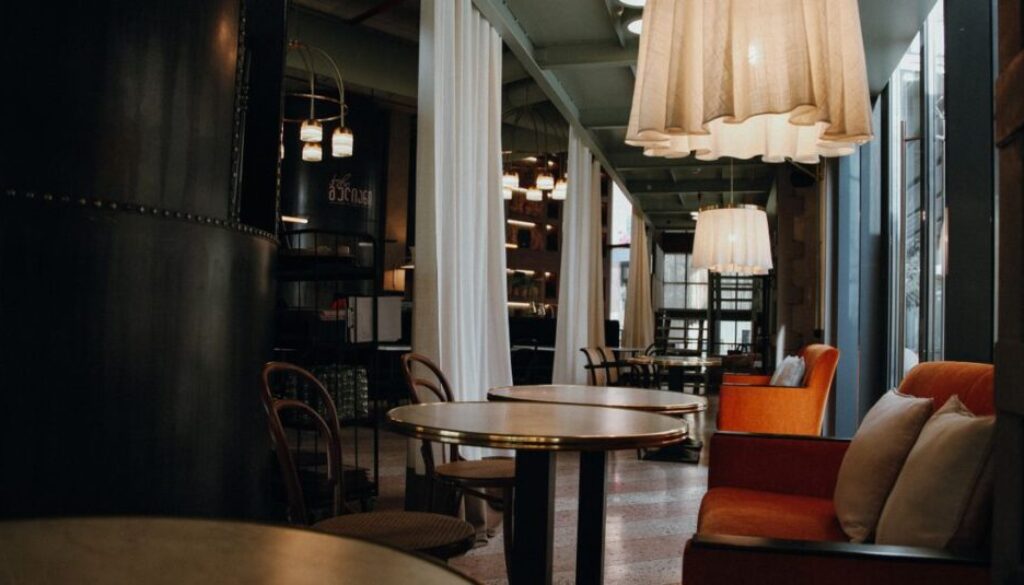
Responses vary. Some operators limit laptop use during certain hours; others choose to integrate this demand rather than push back against it, creating a more structured offer. That is where the co-working café comes in: a hybrid format that keeps the sociability of a coffee shop while adding reliable wifi, power outlets, call-friendly areas and, in some cases, day or monthly access plans that include drinks. Costa Coffee, the UK coffee chain, has reportedly trialled dedicated work areas in selected locations. In cities like Manchester, some independent cafés have adopted similar models.
The point, though, is not only commercial. When a venue is designed to host work, its meaning changes too. It remains a café, but it takes on a function different from that of a neighbourhood bar or a breakfast room. It can be read as an opportunity, but also as a sign that the time people spend outside home is being redefined.
Redesigning a café means redesigning the flow
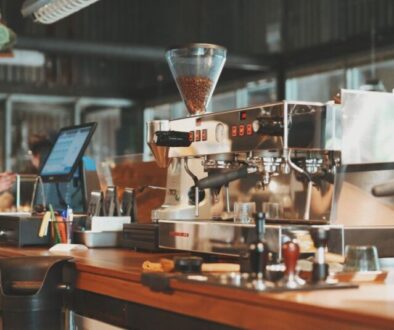
Whether a venue is trying to accommodate remote workers or serve customers faster, physical redesign has become a central issue. Refreshing the décor or updating the brand image is not enough. The real challenge is understanding how people move through the space, where friction builds up and which elements slow service without always being obvious to the customer.
Customer flow, equipment placement and the movement of baristas behind the counter may sound like small details, but they often determine whether service feels smooth or strained. Sometimes moving a menu board or rearranging the back-of-house area is enough to change the rhythm of the room. For many operators, the goal is no longer purely aesthetic: it is to build spaces flexible enough to adapt to how they are actually used, not just how they were imagined at launch.
In that sense, design does not arrive at the beginning as decoration. It arrives as an answer. First come the brand position, the experience the venue wants to create and the way work moves inside it; then come the materials, colours and atmosphere.
The fast lane of the US market
In the United States, meanwhile, part of the category’s visible growth seems to be heading in the opposite direction. Yelp, the review platform, included 7 Brew, an Arkansas-born drive-through coffee chain that received an investment from Blackstone, among the brands showing the strongest growth in 2026. The ranking points to sharply rising consumer interest year on year and highlights the visibility of a model built on speed, personalisation and broad menus.
The list also includes other coffee chains that follow a similar logic: drive-through service, fast ordering and highly customised drinks. Within that space, there is room for elaborate, often sweet beverages, including the so-called dirty soda, made with soda and additions such as flavoured syrups, cream or fruit. The message is not that this format defines the whole US market, but that it captures a particularly visible part of its momentum.
Starbucks and Dunkin’ remain among the leading operators in the US away-from-home coffee market, but in this specific measure they are not the brands that stand out most for growth. Here, the strongest visible momentum seems concentrated among younger chains built around speed and personalisation.
The two models — the co-working café and the drive-through — are not directly comparable. Urban infrastructure, consumption culture and demand all differ. Still, placed side by side, they say something useful about where coffee shops are heading. The traditional coffee shop is under pressure not because it is disappearing, but because it is being pushed to specialise in one direction: extended hospitality or accelerated service. The interesting question now is not which model will win outright. It is whether there is still room for a café that can hold both without losing a clear identity.