Out of the comfort zone: ordering something different at the bar
There is a particular moment when you sit down at a bar, open the menu, and then close it again. Many drinkers tend to return to classics like the Negroni, Margarita, or Whisky Sour. The choice makes sense: cocktails are expensive, the risk of ending up with something you do not enjoy is real, and habit offers a form of protection.
Still, taste is shaped by exposure as much as by confirmation. If the goal is to widen your range a little, the most useful move is often not a dramatic leap but a sideways step: looking for drinks that share a familiar structure while introducing a new accent. It is a way of thinking many bartenders know well, because it starts from a simple question: what does the person in front of you already enjoy?
The value of a small shift
Taking a classic and nudging it slightly in another direction can be more revealing than it first appears. Someone who often orders an Old Fashioned, for instance, may find in the Vieux Carré a territory that still feels familiar: it is a classic stirred, spirit-forward drink with Cognac, sweet vermouth, and Bénédictine, and it echoes some elements of both the Manhattan and the Sazerac. The point is not to leave the original behind, but to widen it with a little more depth and a touch more sweetness.
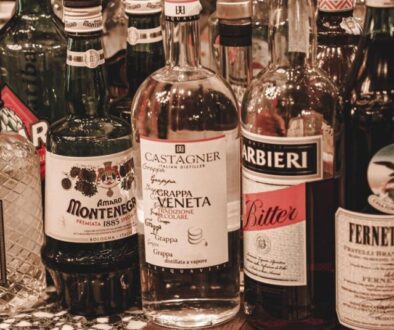
The same logic applies to the Negroni. Its appeal lies in the balance between bitter, botanical, and alcohol, and that reference point can lead to less obvious but equally legible combinations. A simple example is equal parts mezcal and Amaro Montenegro, stirred over ice and finished with an expressed orange peel. With just two ingredients, the drink lets the smokiness of agave and the herbaceous quality of the amaro support each other without any complicated technique.
The Margarita also leaves room for a measured detour. Rather than trying to rebuild it from scratch, it can be useful to explore its sour logic through a related structure: a Gin Sour, for example, with orgeat in place of simple syrup. The almond note adds roundness and softness, but it does not break the line that keeps the drink fresh and tense.
Beer as an ingredient worth putting back in the frame
Alongside these small shifts within classic mixology, one category often remains in the background even though it deserves more attention: beer cocktails. Shandy appears in English-language writing by the late nineteenth century, while Glühbier is a winter tradition found in some European regions. Yet in the contemporary story of mixed drinks, beer is often pushed to the margins, as if it were only a secondary curiosity.
In practice, though, its versatility is considerable. In some long drinks, a pilsner can replace tonic or soda and bring a more bitter line, along with a sense of greater depth. A stout turned into syrup can add complexity to a tiki-style drink, bringing roasted notes and a dark sweetness that is difficult to achieve in other ways. A sour beer, used carefully, can also work well with citrus liqueurs or amaro.
For many bartenders, that means building drinks that are easy to read and easy to enjoy, without overloading them with technique or specialist references. The point, in the end, is fairly simple: curiosity does not have to mean a radical gesture. It can be a considered substitution, an ingredient that shifts the balance just enough, a way of making something unfamiliar feel a little more familiar. And in a bar, as in editorial work, the most effective change is not always the loudest one.