The Martini, the glass and the ritual of service
Few drinks seem to ask for a stage quite like the Martini. It has never been only a question of gin, vermouth and ratios: the way it reaches the table, the setting in which it is served and the object that carries it all matter too. In some London bars, that attention is once again becoming part of the conversation, not as a passing fad but as a deliberate way of framing the drink.
In Mayfair, Brutes, a soon-to-open London bar, is set to focus entirely on the Martini. The project comes from Guy Mazuch and James Stevenson, former JKS Restaurants operators, the London group behind venues such as Gymkhana and Sabor. Their starting point is clear: in their view, part of cocktail culture has leaned too heavily on precision, batching and replicability, while the direct relationship with the guest has faded into the background. That is a perspective, not a verdict on the whole industry, but it helps explain the bar’s approach.
Brutes offers a customisable Martini card built around a checkbox system, allowing each guest to shape a personal version of the drink. More or less elaborate garnishes, seasonal ingredients, chef collaborations: the goal is not to freeze the Martini into a fixed formula, but to use it as a space for choice and adjustment. In that sense, the bar fits into a small cluster of London openings that have put the cocktail back in the spotlight, without turning that return into proof of a wider, settled shift across cocktail culture.
The glass as part of the story
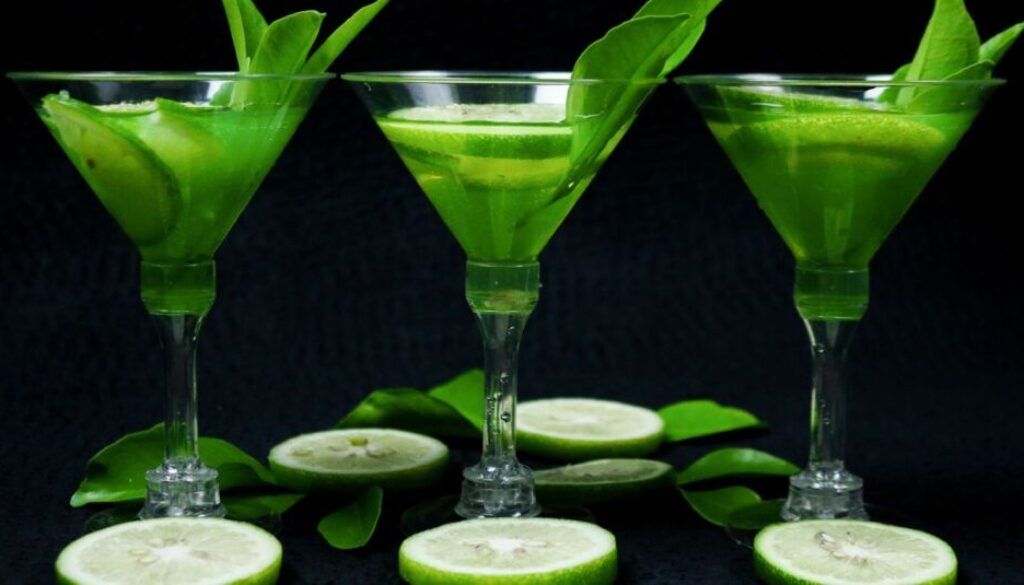
Alongside the drink itself sits the vessel. With the Martini, glass shape has always been part of the debate because it affects both the cocktail’s look and its perception at the table. The wide, shallow coupe, a twentieth-century icon, now coexists with the more compact and elegant Nick and Nora, while hybrid versions aim to balance classic geometry with tighter volume control. Rather than one shape clearly replacing another, what emerges is a shift in preference from bar to bar.
A six-ounce coupe remains a reliable reference for many drinks served without ice, while the classic Nick and Nora is still widely recognised, even as it is joined by updated forms that rethink its profile. Cocktail glassware has broadened, with higher-end and hand-blown options increasingly aimed at both professionals and the home bar. In this landscape, glass is more than a functional support: it becomes a question of tone, proportion and visual identity.
That attention to glassware is consistent with the kind of experience bars like Brutes want to build. If the service is based on fresh ingredients and on adapting the drink to the guest, the glass can no longer be treated as interchangeable. It is the first object the guest touches, and often the first clue to the kind of ritual the bar wants to create.
The point, then, is not that the Martini is changing wholesale, or that one glass format is erasing the others. Rather, in certain settings the cocktail is being treated as a set of linked decisions: recipe, service, glassware, interaction. That is where its contemporary appeal becomes easiest to read. Not only in the drink itself, but in the way a bar chooses to bring it to the customer.